
REVIEW · EVEREST & HIMALAYA HELICOPTER TOURS
Helicopter Return Everest Base Camp Trek, KTM-LUKLA & Gorakshep-KTM by Heli
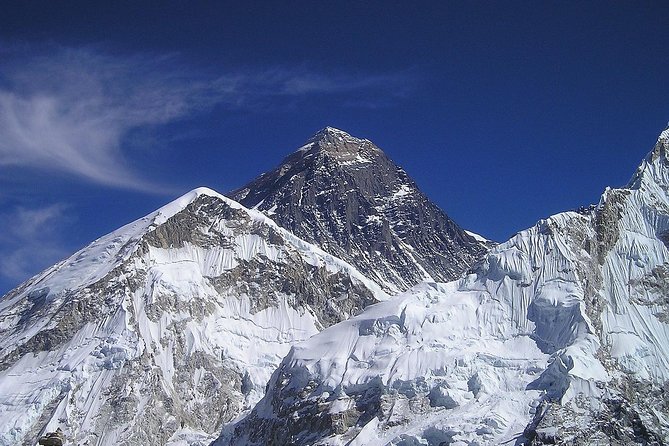
The mountains are only half the story. This Everest Base Camp trek combines a classic walk through Sherpa villages with helicopter flights at the start and finish, giving you the famous trail without spending as many days walking back to Lukla. I especially like the chance to visit Namche Bazaar and Tengboche, and I value the planned acclimatization days at Namche and Dingboche. The main concern is the price and itinerary: the advertised $9,999 does not clearly include the shared helicopter flights, and the description says nine days while the detailed schedule runs to 14 days.
You will walk from Lukla through Phakding, Namche, Tengboche, Dingboche, Lobuche, Gorakshep, and Everest Base Camp before reaching Kala Patthar. Guide Dipak has earned praise for his planning and care, while company director Buddhi is noted for handling changes and local arrangements. Still, this is a demanding high-altitude trek, not a quick sightseeing tour, and weather can disrupt both the Lukla flight and the helicopter return.
Key points to know before booking
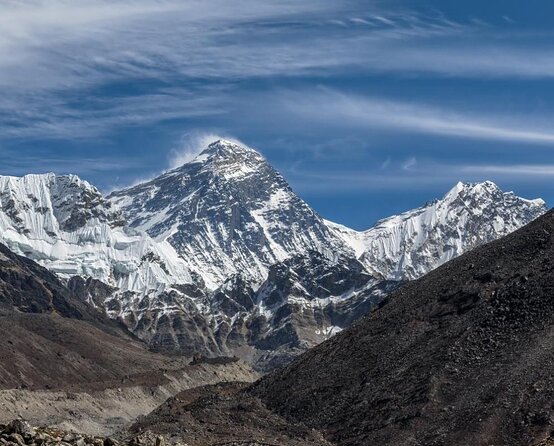
- Kala Patthar reaches 5,545 meters, offering the clearest listed viewpoint toward Everest, Nuptse, Pumori, Lhotse, Changtse, the Khumbu Glacier, and the Khumbu Icefall.
- Two acclimatization days are built in, one at Namche Bazaar and another at Dingboche, an important feature on a route that climbs above 5,000 meters.
- Helicopter flights appear to cost extra, with shared KTM to Lukla service listed at $400 and shared Gorakshep to Kathmandu service at $999 during the stated trekking months.
- The schedule contains conflicting information, calling the experience nine days while also listing a 14-day program ending with departure from Nepal.
- The walking group is capped at 15 people, with a trekking guide, permits, tea-house lodging, and nine breakfasts included.
- Buddhi and guide Dipak receive the strongest praise, especially for communication, organization, local help, and support when flights changed.
What this Everest trek actually includes
At its best, this is a carefully supported version of the classic Everest Base Camp route. You fly from Kathmandu toward Lukla, walk uphill through the Khumbu Valley, spend time at the major Sherpa settlements, then reach Everest Base Camp and Kala Patthar. The return is meant to be quicker by helicopter from Gorakshep to Kathmandu.
That last point needs checking before you pay. The detailed itinerary lists a normal trek back through Pheriche, Namche Bazaar, and Lukla, followed by a flight to Kathmandu. The included and excluded sections separately list shared helicopter prices. I would ask for a written day-by-day schedule and a precise price breakdown before booking.
The listed price is $9,999 per person. That is a serious sum, and the value depends almost entirely on what is included in the final quotation. Tea-house lodging, a guide, permits, and nine breakfasts are included. Lunch and dinner are paid locally, porter service costs $30 per day per porter, and the two helicopter legs are listed as extra in the main trekking months of October, November, March, April, and May.
Private helicopter choices cost much more. Kathmandu to Lukla is listed at $2,000 for a private flight, while Gorakshep to Kathmandu costs $3,600 per helicopter. Ask if that private price is for the entire aircraft rather than per person, and ask how many people the aircraft can carry. These details can change the real cost dramatically.
More Himalaya Helicopter Tours in Kathmandu:
- Everest Base Camp Helicopter Tour landing at Everest View Hotel
★ 5.0 · 668 reviews - Everest Base Camp Helicopter Tour landing at Hotel Everest View
★ 5.0 · 218 reviews - Everest Base Camp Trek with Helicopter Return from Gorakshep to Lukla
★ 5.0 · 161 reviews
Kathmandu begins the trip at a gentler pace
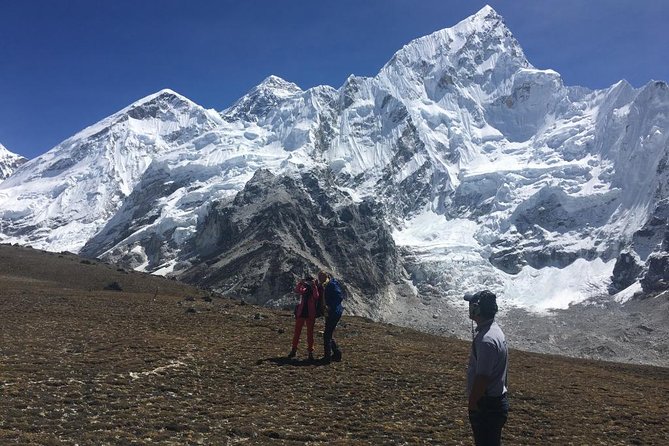
The first day is arrival in Kathmandu at about 1,350 meters. This gives you a useful low-altitude start before the mountain section. The city is described as the meeting point for the trip, with pickup offered and confirmation provided at booking.
The practical meeting time is 5:45 am. That early start matters because flights toward Lukla are tightly tied to mountain weather and operating conditions. Keep your first day flexible, and do not plan a major Kathmandu activity immediately after the flight.
The company also provides one complimentary trekking duffel bag, which must be returned after the trip. You carry a smaller day pack while the main luggage is handled separately, especially if you hire a porter. A day pack, sturdy trekking shoes, warm layers, rain protection, gloves, a water bottle, sunglasses, a headlamp or torch, and a warm sleeping bag are all part of the stated equipment advice.
Lukla and Phakding introduce the trail
The flight from Kathmandu to Lukla is listed at about 35 minutes. Lukla sits at approximately 2,828 meters, so you begin at an altitude that already demands sensible pacing. The first walk to Phakding is listed at three to four hours, with Phakding at about 2,780 meters.
This first section passes through smaller settlements named Nurning, Phakding, Benkar, and Monjo. You will see prayer wheels, chortens, prayer flags, and suspension bridges over the Dudh Koshi River. These details are not decoration added for visitors. They are part of the daily religious and social life of the Khumbu.
The first tea house night also shows you the basic rhythm of the trek. Tea houses provide a place to sleep and eat, but the accommodation is not presented as a hotel experience. Bring the suggested warm layers and down jacket, since the sleeping environment can be below freezing at higher points.
Flight changes are a real part of this route. One account describes an original Lukla flight being canceled by weather, followed by Buddhi arranging a helicopter and helping find another couple to share the cost. That kind of local help is valuable, but the cost-sharing arrangement should never be assumed. Ask how weather substitutions are handled before departure.
Namche Bazaar is the first major milestone
The walk from Phakding to Namche Bazaar takes about five to six hours and reaches roughly 3,440 meters. You follow the Dudh Koshi through Monjo and Jorsale, enter Sagarmatha National Park, and cross more suspension bridges decorated with prayer flags.
Namche is not just a stop for sleep. It is the main trading and social center of the route, with shops, food, mountain views, and a strong Sherpa identity. The schedule includes a full rest day here, which I consider essential rather than wasted time.
Use the day to walk slowly, see the town, and let your body adjust. The route becomes much higher after Namche, so rushing onward would undermine one of the most important safety features in the plan. The town also gives you a chance to check clothing, batteries, water, and any small gear problem before the trail becomes more remote.
Past feedback about the company repeatedly praises communication and organization. Buddhi is described as attentive to planning and local needs, while Dipak is praised for making the walking days enjoyable and explaining the route. Those qualities matter most around Namche, where the guide must balance a group’s energy with the need for gradual altitude gain.
More Heli-Hike Trips in Kathmandu:
- Everest Base Camp Trek with Helicopter Return to Lukla – 10 Days
★ 5.0 · 34 reviews - Everest Base Camp Trek with Helicopter Return -11 Days
★ 5.0 · 12 reviews - Everest Base Camp Trek with Helicopter Return – 10 Days
★ 5.0 · 9 reviews - Everest Base Camp trek with Helicopter return 9 days
★ 5.0 · 8 reviews
Tengboche adds monasteries and mountain views
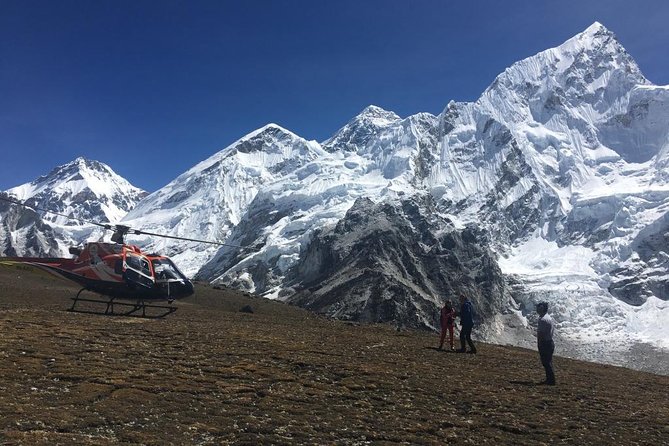
The trail from Namche to Tengboche takes about four to five hours and climbs to approximately 3,850 meters. This is one of the most appealing sections for anyone who wants more than a mountain photograph.
Tengboche is known for its monastery setting, and the route includes monasteries, chortens, and prayer wheels. The religious features give the walk a sense of place that a fast helicopter tour cannot provide. You are moving through a living Sherpa region, not simply heading toward a famous base camp sign.
The cost of this atmosphere is physical effort. At nearly 4,000 meters, short walks can feel harder than expected. Keep your pace slow, drink regularly, and follow the guide’s instructions. The schedule’s four to five hours is a planning estimate, not a promise that every group will move at the same speed.
Dingboche gives you another altitude break
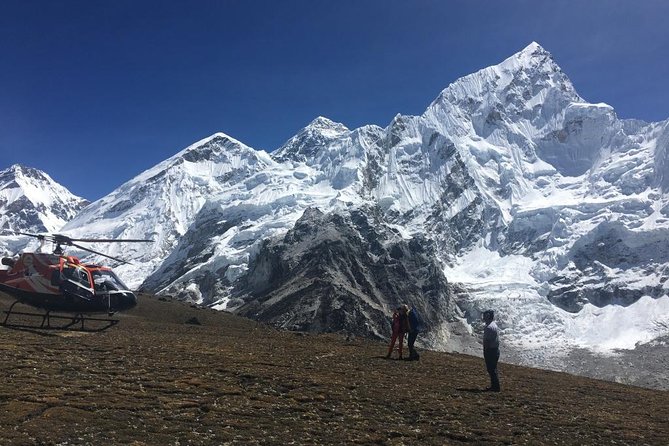
From Tengboche, the route continues to Dingboche at about 4,350 meters. The walk is listed at four to five hours. The village is an important staging point before the trail climbs toward Lobuche and Gorakshep.
A second rest day is scheduled here. This is another strong feature of the program, since the next few days involve a major increase in altitude. Dingboche is where you should be especially honest about headaches, nausea, unusual tiredness, or other signs that your body is struggling.
The schedule does not promise a medical service or specialist altitude treatment, so do not treat the rest day as a guarantee against altitude illness. You are still responsible for telling your guide how you feel. The guide’s role is most useful when you share problems early rather than trying to prove toughness.
Lobuche and Gorakshep mark the high point
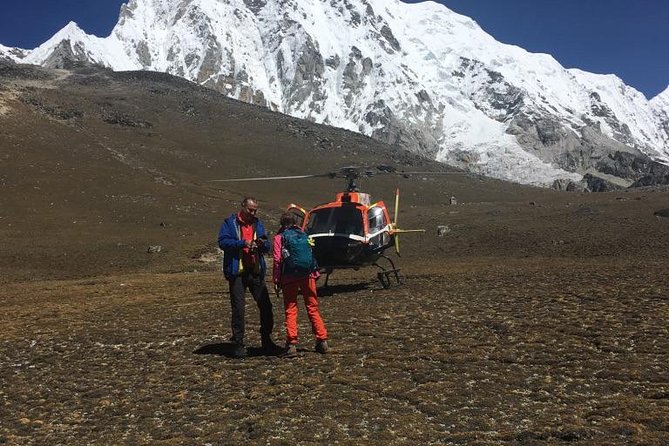
The walk to Lobuche takes four to five hours and reaches approximately 4,910 meters. At this height, the route becomes a test of patience. You may find yourself taking frequent breaks and covering ground more slowly than expected.
The next stage reaches Gorakshep at about 5,180 meters. The listed walking time is three to four hours, followed by another two to three hours to Everest Base Camp. Gorakshep is the practical base for the highest part of the trek, but it is not a place to underestimate. Cold, thin air and a long day can make even a modest distance feel substantial.
Everest Base Camp is the emotional goal for many people, but the view from Base Camp is not the main visual prize described in the program. The more expansive panorama comes from Kala Patthar. Base Camp gives you the sense of reaching the historic expedition route, while Kala Patthar provides the broad mountain view.
The route description highlights the Khumbu Glacier, the Khumbu Icefall, glacial rivers, avalanche paths, and the surrounding peaks. These features explain why the trek feels bigger than a single destination. You are seeing the working terrain of high-altitude climbing, not just checking a point on a map.
Kala Patthar is the visual payoff
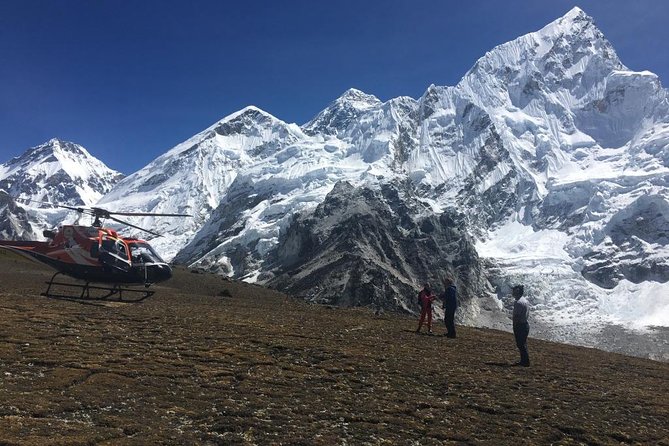
The climb to Kala Patthar reaches about 5,545 meters and is listed at two to three hours. This is the highest point in the itinerary and the place associated with the clearest stated views of Everest, Nuptse, Pumori, Lhotse, and Changtse.
The exact experience depends on weather and visibility. The itinerary describes glittering peaks and views toward the glacier and icefall, but no mountain viewpoint can guarantee clear skies. You need warm clothing, gloves, sunglasses, and a camera with spare batteries. The equipment list is practical here, especially the down jacket and four-season sleeping bag.
After Kala Patthar, the planned walk continues to Pheriche at about 4,280 meters, taking five to six hours. That makes for a demanding day, so you should ask how the helicopter return changes this section. If you fly from Gorakshep to Kathmandu, the walking schedule may be shorter. If not, the descent through Pheriche, Namche, and Lukla remains a substantial part of the trip.
The return route is where the plan needs clarification
The detailed schedule shows a trek from Pheriche to Namche in four to five hours, then Namche to Lukla in five to six hours. A flight back to Kathmandu is listed on the following day, with final departure on day 14.
That is a normal return pattern for the Everest Base Camp route. It is not the same as a Gorakshep to Kathmandu helicopter return. The tour name, duration, and itinerary do not align cleanly, so this is the single most important issue to settle.
Ask these questions in writing:
- Is the experience nine days, 14 days, or a flexible length?
- Is the helicopter from Gorakshep to Kathmandu included in the $9,999?
- If not, is the listed $999 shared flight still current?
- Does the helicopter replace the trek from Gorakshep to Lukla?
- What happens if poor weather prevents the helicopter?
- Are tea-house nights included during any extra delay?
The cancellation terms allow a full refund if you cancel at least 24 hours before the start time. If weather cancels the experience, you are offered another date or a full refund. That is helpful, but ask what happens when weather delays only one flight after the trek has already begun.
Food, lodging, porters, and group size
Tea-house accommodation is included in the mountain section. Breakfast is listed as included for nine meals, while lunch and dinner are paid locally. The food may include familiar choices and local dishes, and past comments specifically praise the tea houses and food options, including Tibetan bread.
Porters cost $30 per day and are paid directly at Lukla. If you hire one, pack with the provided duffel limits in mind and keep valuables, documents, medication, and essential warm clothing in your day pack.
The group limit is 15 people. That is small enough for a guide to keep track of the group, but it is not a private trek. Walking speeds, rest needs, and altitude responses can vary widely, so ask about the guide-to-client ratio and whether a second guide is added for a full group.
Who should book this trek?
I would consider this trip for someone who wants the classic Everest route but values a faster return and strong logistical support. It suits people who are ready for long walking days, cold tea houses, suspension bridges, steep trails, and high altitude.
It is less suitable if you want a short luxury holiday, a guaranteed helicopter schedule, or a simple all-inclusive price. The $9,999 cost only makes sense after the helicopter charges, meals, porter service, transport, and any extra nights are clearly itemized.
The strongest reason to consider the company is the reported personal attention from Buddhi and the positive comments about Dipak’s guiding. Good organization matters here because weather, flights, health, and altitude can all change the plan. The strongest reason to pause is the unclear pricing and conflicting duration.
Should you book it?
Book this trip if you want a supported Everest Base Camp trek, appreciate two acclimatization days, and are willing to confirm every helicopter and cost detail before paying. The route itself offers the major Khumbu experiences: Namche Bazaar, Tengboche, Sherpa villages, prayer flags, mountain monasteries, Everest Base Camp, and the Kala Patthar viewpoint.
I would not book it on the headline price alone. First get a written itinerary that states the true duration and confirms the return method. If the $9,999 price includes both helicopter legs, required permits, tea-house nights, and the listed support, it may offer useful convenience. If those flights are extra, the final amount could be much higher than expected.
FAQ
How long is the experience?
The tour summary says approximately nine days, but the detailed schedule lists 14 days from arrival in Kathmandu through final departure. You should confirm the actual duration with the operator before booking.
What does the $9,999 price include?
The listed inclusions are mountain tea-house accommodation, a trekking guide, entry permits, trekking permits, and nine breakfasts. Lunch and dinner are paid locally. The helicopter flights and porter service are listed separately, so confirm the final package price.
How much are the shared helicopter flights?
The stated shared flight from Kathmandu to Lukla costs $400 per person, and the shared flight from Gorakshep to Kathmandu costs $999 per person. These prices are listed for October, November, March, April, and May.
Is a private helicopter available?
Yes. A private Kathmandu to Lukla helicopter is listed at $2,000, and a private Gorakshep to Kathmandu helicopter is listed at $3,600 per helicopter.
What equipment should I bring?
Bring a duffel or rucksack, day pack, trekking shoes, warm clothing, waterproof layers, gloves, socks, trekking trousers and shirts, sunglasses, a down jacket, water bottle, torch, camera batteries, and a warm sleeping bag. A duffel bag and sleeping bag may be provided, subject to return after the trip.
What happens if bad weather cancels the trip?
The experience requires good weather. If it is canceled because of poor weather, you are offered a different date or a full refund. For your own cancellation, you must cancel at least 24 hours before the start time for a full refund.
Just added around Kathmandu
- Mount Everest Helicopter Tour with Landings★ 5.0 · 2 reviews
- Day Tour to Everest Base Camp By Helicopter★ 5.0 · 16 reviews
- Mount Everest Scenic Helicopter Tour★ 5.0 · 6 reviews
- Guaranteed Landing at Everest Base Camp Kalapathar by Helicopter★ 5.0 · 38 reviews
- Kathmandu To Lukla By Helicopter Flight★ 5.0 · 6 reviews
- Everest Base Camp Helicopter Tour with Hotel Everest View Landing★ 5.0 · 52 reviews
- Langtang Helicopter Tour★ 5.0 · 6 reviews
- Himalayan Gosaikunda Helicopter Tour from Kathmandu★ 4.5 · 3 reviews
Everest & Himalaya Helicopter Tours, compared.
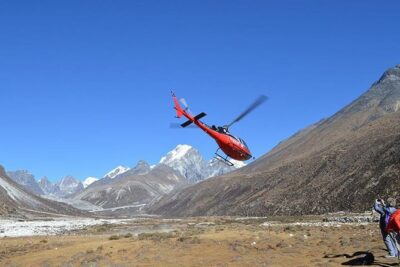
Everest Base Camp Helicopter Tour landing at Hotel Everest View
Read our review →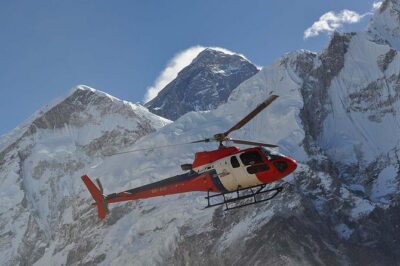
Everest Base Camp Trek with Helicopter Return from Gorakshep to Lukla
Read our review →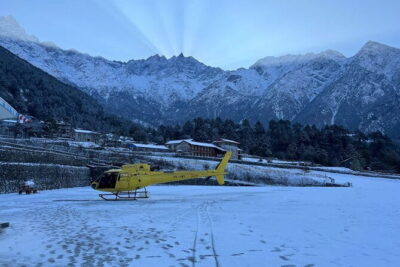
Everest Base Camp helicopter tour with landing
Read our review →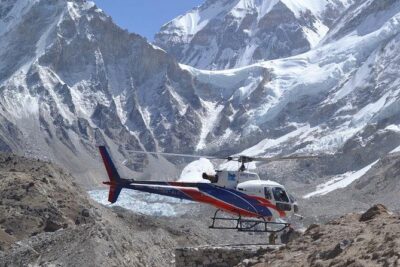
Everest Base Camp Helicopter Tour with Hotel Everest View Landing
Read our review →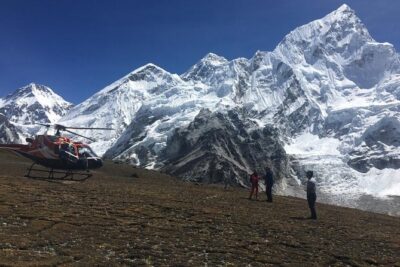
Guaranteed Landing at Everest Base Camp Kalapathar by Helicopter
Read our review →
Everest Base Camp Helicopter Tour landing at Everest View Hotel.
Read our review →
Everest Base Camp Trek with Helicopter Return to Lukla – 10 Days
Read our review →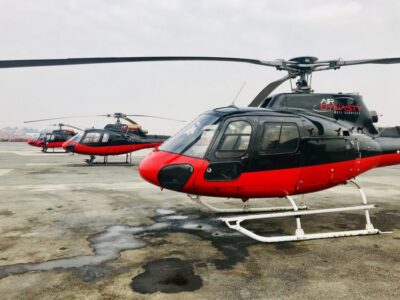
Browse the lists this tour appears in