
REVIEW · EVEREST & HIMALAYA HELICOPTER TOURS
Everest Base Camp Trek with Helicopter Return from Gorakshep to Lukla
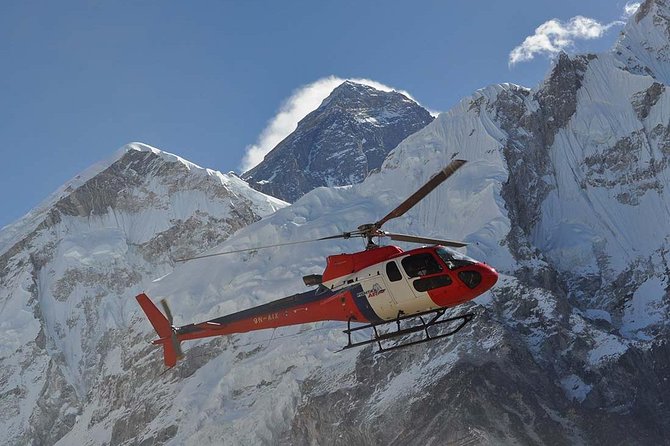
The mountain trail comes first, the helicopter comes later. This 12-day Everest Base Camp trek combines classic Himalayan walking with a shared 20-minute flight from Gorakshep to Lukla. I like the careful acclimatization at Namche and Dingboche, and I like that porters, permits, meals, staff costs, and the high-altitude helicopter transfer are included.
The biggest plus is the support system. Guides are first-aid trained, an oximeter is carried, filtered trail water is provided, and the small group size is capped at 14. The main drawback is the price: $3,000 per person is a serious outlay, and the trek still requires strong fitness, personal gear, travel insurance, and patience with mountain weather.
- A classic Everest route with a shortcut home: Walk from Lukla to Base Camp, then fly by shared helicopter from Gorakshep to Lukla.
- Two useful acclimatization days: Namche includes an Everest View Point hike, while Dingboche gives you a climb to Nangkartshang Peak.
- A demanding high point: Kala Patthar reaches 5,555 meters and offers the trip’s most rewarding mountain views.
- Support is built into the cost: A guide, one porter for every two guests, permits, meals, accommodation, water filtration, and staff expenses are included.
- A small organized group: The maximum group size is 14, with a minimum booking of two people.
- Weather still controls the schedule: The helicopter and mountain flights depend on suitable conditions, so flexibility matters.
Why This Everest Trek Is Different
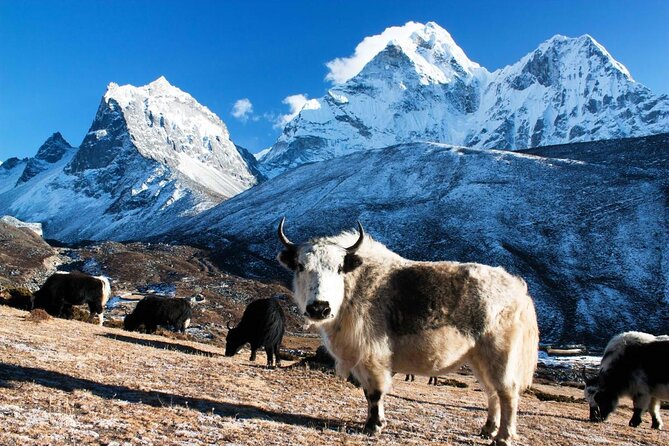
Many Everest Base Camp trips return on foot, adding several days of downhill walking. This version keeps the famous approach but replaces the return from Gorakshep with a shared helicopter flight to Lukla. That saves time and removes the need to retrace the trail through Lobuche, Dingboche, Namche, and Phakding.
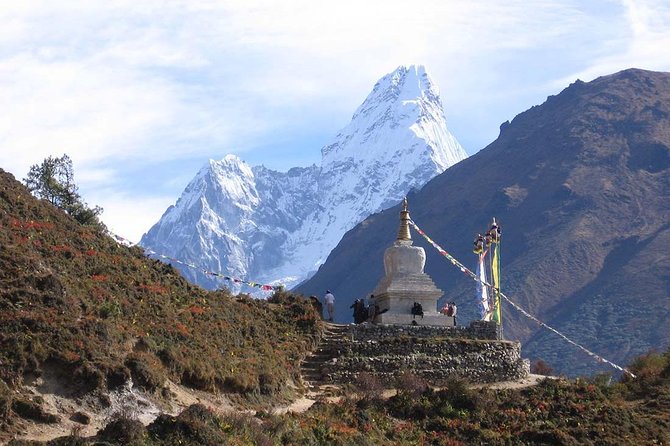
I like this format for two reasons. First, the walk to Base Camp remains the main event, so you still cross suspension bridges, pass Buddhist mani stones, visit Tengboche Monastery, and follow the Khumbu Glacier. Second, the helicopter provides a clean ending after the hardest days at altitude.
You should not mistake the flight for an easy option overall. The route still reaches 5,365 meters at Everest Base Camp and 5,555 meters at Kala Patthar. At those heights, even a short climb can feel slow and serious.
The scheduled group size of up to 14 is sensible for a mountain trek. It is large enough to keep the price from climbing higher, but small enough for a guide to keep track of the group. A minimum of two people is required, so this is not designed as a solo booking.
Day 1: Kathmandu Arrival and a Practical Briefing
Your first day begins with an airport greeting at Tribhuvan International Airport. A private tourist vehicle takes you to your hotel, followed by a pre-trip meeting with your guide.
This is more than a formal welcome. Use the meeting to confirm the next morning’s airport transfer, ask about the weather, check your gear, and understand how the helicopter return is planned. The package includes two nights in a three-star Kathmandu hotel, with breakfast included.
Lunch and dinner in Kathmandu are not included, nor are drinks. That is easy to manage, but budget for it. Nepal entry fees, international airfare, departure tax, and personal trekking equipment also sit outside the $3,000 price.
More Himalaya Helicopter Tours in Kathmandu:
- Everest Base Camp Helicopter Tour landing at Everest View Hotel
★ 5.0 · 668 reviews - Everest Base Camp Helicopter Tour landing at Hotel Everest View
★ 5.0 · 218 reviews - Everest Base Camp helicopter tour with landing
★ 5.0 · 61 reviews
Day 2: The Short Flight to Lukla and the Walk to Phakding
The morning starts at Kathmandu’s domestic airport with a roughly 35-minute flight to Tenzing and Hillary Airport in Lukla, at 2,804 meters. From there, you walk toward Phakding.
Lukla is the real gateway to the Khumbu region. The flight is scenic, but mountain weather can affect departures. Keep your first day flexible and avoid planning a tight international connection after the trek.
The route to Phakding introduces the rhythm of the journey without immediately pushing you to extreme altitude. Accommodation in Phakding is in a trekking guesthouse, with attached toilets included in the plan.
The trek package covers breakfast, lunch, and dinner on the walking days. It also includes filtered water using a Katadyn Pocket Water Filter, along with seasonal fruit. That is useful because buying bottled water repeatedly would add cost and plastic waste.
Day 3: Namche Bazaar and the First Long Climb
From Phakding, you follow the Dudh Koshi River toward Namche Bazaar. The day takes about six hours of walking and includes repeated crossings of suspension bridges decorated with prayer flags.
This is where the route begins to feel properly Himalayan. The bridges, river noise, steepening trail, and first big mountain views make the day memorable. It is also the first time you may notice that the altitude changes how quickly you walk.
Namche is more than an overnight stop. It is the main trading and service center of the Khumbu route, and it gives you a useful pause before higher elevations. Accommodation here is in a guesthouse with an attached toilet, a level of convenience not guaranteed at every mountain stop.
Day 4: Namche Acclimatization and the Everest View Point
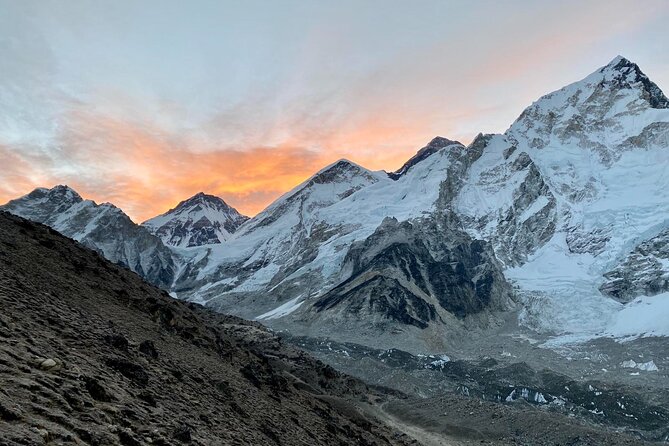
You spend a full day in Namche to help your body adjust to thinner air. The planned outing includes a short hike around Namche and an Everest View Point, with Himalayan views and a sunrise opportunity.
This is one of the smartest parts of the schedule. You gain elevation during the day but return to Namche to sleep, giving you a better chance to adapt before moving higher. Do not treat the day as a rest day only. The short walk is part of the altitude plan.
The description gives the Everest View Point stop a duration of about 24 minutes, but the entire acclimatization day naturally involves more time around Namche. Ask your guide how the day will be paced, especially if you feel tired or develop a headache.
More Heli-Hike Trips in Kathmandu:
- Everest Base Camp Trek with Helicopter Return to Lukla – 10 Days
★ 5.0 · 34 reviews - Everest Base Camp Trek with Helicopter Return -11 Days
★ 5.0 · 12 reviews - Helicopter Return Everest Base Camp Trek, KTM-LUKLA & Gorakshep-KTM by Heli
★ 5.0 · 9 reviews - Everest Base Camp Trek with Helicopter Return – 10 Days
★ 5.0 · 9 reviews
Day 5: Tengboche and Its Monastery at 3,860 Meters
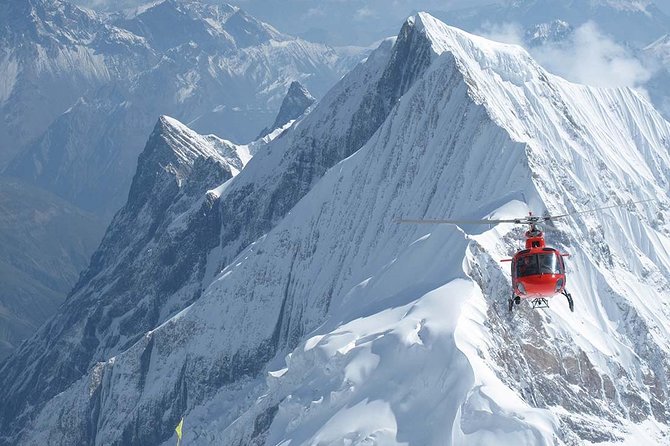
The trail follows the Dudh Koshi and climbs toward Tengboche, which sits at 3,860 meters. The route includes mountain views and a descent to Debuche before the final approach.
Tengboche Monastery is the cultural heart of this part of the trek. Prayer flags, mani stones, and Buddhist practice give the trail a sense of place beyond its famous peaks. I would allow yourself time to be quiet here rather than treating the monastery as a quick photo stop.
The day is long, listed at roughly 16 hours in the schedule, though that figure may reflect the full operating day rather than continuous walking. Confirm the expected walking time with your guide at the briefing. At this altitude, the difference between a steady day and a rushed day matters.
Day 6: Dingboche and the Imja Khola
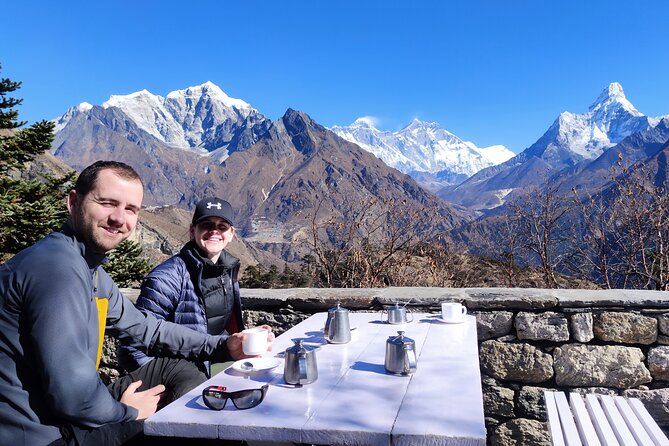
From Tengboche, the trail drops to Debuche, crosses a suspension bridge over the Imja Khola, and climbs through Pangboche. Mani stones line parts of the route, adding another reminder that this is a living cultural corridor, not only a mountain challenge.
Dingboche is at a higher elevation and prepares you for the difficult days ahead. The village is an important stop because your body needs time before the push toward Lobuche and Everest Base Camp.
The itinerary again lists a long operating day, around 16 hours. You should ask how much of that is actual walking and how much includes meals, stops, and overnight arrangements. The practical question is not simply how far you go, but how much recovery time you get.
Day 7: Nangkartshang Peak for Acclimatization
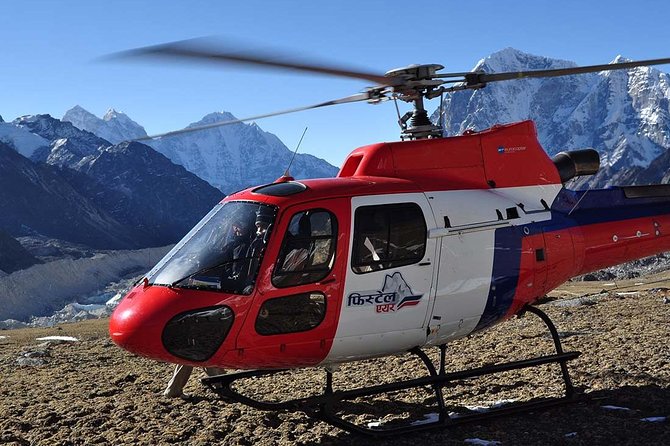
You do not advance toward Base Camp on this day. Instead, you climb Nangkartshang Peak above Dingboche, using the outing to gain altitude and return to the same lodging.
This is a valuable design choice. The summit provides views toward the surrounding Himalayan peaks, while the return to Dingboche allows you to sleep at a lower altitude than your highest point of the day. That pattern is easier on your body than charging upward without a pause.
The hike is still demanding. You should not spend the day racing to the top. Walk at the guide’s pace, drink regularly, and use the provided oximeter checks as one piece of information about how you are adapting. An oxygen reading does not replace medical judgment, but it gives the guide another useful measure.
Day 8: Lobuche, the Khumbu Glacier, and Memorial Stones
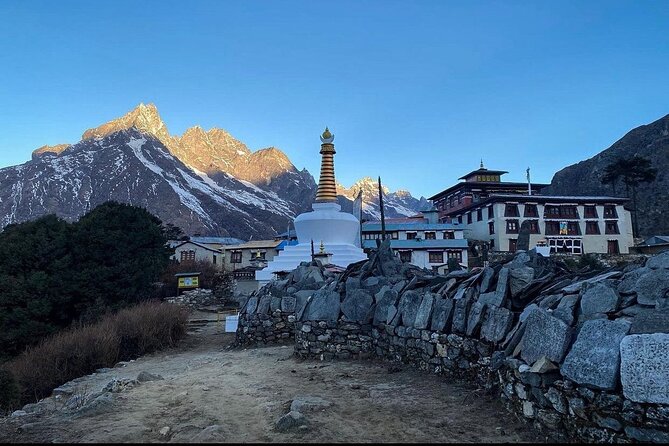
The trail heads toward Lobuche along the lateral moraine of the Khumbu Glacier. You pass stone memorials dedicated to climbers who died on nearby peaks.
This section can feel stark and solemn. The memorials bring the risks of high-altitude climbing close to the trail, even though a Base Camp trek is not a technical mountaineering expedition. You are walking into a region where weather, altitude, and terrain deserve respect.
Lobuche is one of the high overnight stops, so the accommodation is more basic than in Kathmandu. The package does include lodging, meals, guide support, porters, and staff costs, which helps make the remote setting manageable.
Day 9: Everest Base Camp at 5,365 Meters
This is the main goal. You walk beside and along the Khumbu Glacier toward Everest Base Camp, reaching 5,365 meters.
The day is described as difficult, and you should believe that. The altitude affects pace, while rocky ground and glacier moraine demand attention. Reaching Base Camp is a personal milestone, but the view of Everest itself may not be as clear from Base Camp as it is from Kala Patthar. The value of this day is standing at the staging ground used by mountaineering expeditions and seeing the route from a much closer position.
Spring can bring expedition activity at Base Camp. The atmosphere may feel different depending on the season, but the basic route remains demanding in every month.
You will want to take photographs, yet your schedule and energy may be limited. Listen to your guide, keep your group together, and do not turn the final stretch into a race.
Day 10: Kala Patthar at 5,555 Meters
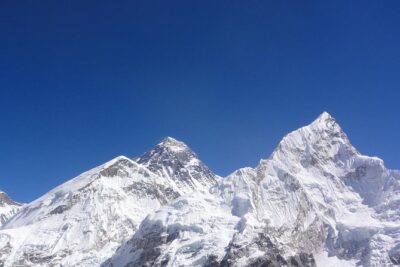
Kala Patthar is the highest point on the listed walking route and one of its hardest tests. The climb reaches 5,555 meters, and the reward is a broad mountain view that includes Everest and the surrounding peaks.
This is the day I would prepare for most carefully. You have already reached Base Camp, but that does not mean the next climb feels easy. Altitude fatigue accumulates, and the slope to Kala Patthar can be slow.
The schedule describes the ascent as one of the most difficult but rewarding parts of the trip. That assessment makes sense. If clear weather cooperates, the summit view can become the visual highlight of the entire journey.
The helicopter return is described as a roughly 20-minute shared flight from Gorakshep to Lukla. The supplied schedule places Lukla and the flight on Day 11, but its wording also refers to a flight onward to Kathmandu. Ask the operator to confirm the exact sequence before departure, because the central promise is the Gorakshep to Lukla helicopter transfer, not an assumed direct flight to Kathmandu.
Day 11: Helicopter Return and the Transition Back to Kathmandu
The shared helicopter from Gorakshep to Lukla is the trip’s unusual finish. After days of walking, you can see the Khumbu from above and avoid repeating the long route back down.
A shared flight means you do not control every departure detail. The flight depends on weather and operating conditions, so build patience into your plans. The itinerary also includes airfare from Kathmandu to Lukla and back, but the written schedule is not fully consistent about whether the final return from Lukla to Kathmandu occurs on this day.
That detail matters if you are arranging an international flight. Confirm the actual flight plan, overnight location, and airport transfer timing before you book your onward ticket.
What the $3,000 Price Really Covers
The price is high, but it includes many costs that can quietly add up on an independent trek. You receive airport and hotel transfers, two Kathmandu hotel nights, trekking accommodation, all standard trek meals, guide and porter wages, staff insurance, permits, domestic airfare, and the shared helicopter.
You also receive a duffel bag, trekking map, sun hat, first-aid kit, and oximeter support. Staff food, equipment, medicine, insurance, administrative expenses, and government taxes are included. That makes the price easier to understand than a basic trek quote that leaves every major extra for you to pay.
You still need to budget for:
- Lunch and dinner in Kathmandu
- Personal trekking equipment
- Alcoholic and nonalcoholic drinks
- Nepal entry visa
- International airfare
- Travel insurance with emergency rescue and evacuation cover
- Tips for the guide, porters, and driver
Tipping is expected, so do not ignore it when calculating the final cost. The helicopter is the biggest value feature, especially if you prefer to save several days of downhill walking, but the shared arrangement means it is not a private charter.
Guides, Porters, and Day-to-Day Support
The company assigns one porter for every two people. That ratio gives you practical help without asking one porter to carry an entire group’s equipment. Pack carefully, keep valuables with you, and stay within the luggage limits given at the briefing.
The guides are licensed, English-speaking, and first-aid trained. Specific guides praised in the supplied feedback include Raj, Ram, Madan, Saman, Rajendra, and Maddy, while porters named include Bishal, Girija, Pesal, Krishna, Probin, Jit, and Sher. Those repeated personal compliments point to the human side of the trip: motivation, encouragement, and attention can matter as much as route knowledge during a hard day.
The team also carries a first-aid kit and an oximeter. This does not remove altitude risk, and you still need insurance that covers evacuation, but it gives the guide tools to monitor the group and respond to common problems.
Who Should Book This Trek
You should consider this trip if you want the full walking approach to Everest Base Camp but do not want to spend extra days retracing the route. It suits people with moderate physical fitness who are ready for long, uphill days and very high altitude.
It also suits you if organized support matters. Meals, lodging, permits, porters, airport transfers, and staff costs are handled in one package. The maximum group size of 14 keeps the experience organized without making it a private trip.
Think twice if you want a relaxed holiday, dislike basic mountain accommodation, or need a fixed schedule. Weather can affect both domestic flights and the helicopter. The itinerary also contains a flight detail that should be clarified before payment.
The 99 percent recommendation rate and 5 out of 5 rating indicate very strong satisfaction, especially with the guides, porters, logistics, and motivation on difficult days. I would place the greatest weight on those practical strengths, because the Everest route itself is naturally impressive, while good support is what helps you complete it safely and enjoyably.
Should You Book the Everest Base Camp Helicopter Return?
I would book this trek if you want Everest Base Camp on foot, Kala Patthar views, two acclimatization stops, and a faster return. The price is easier to justify because it includes the helicopter, domestic flights, permits, meals, porters, staff expenses, and support equipment.
Before paying, confirm the Day 11 flight sequence, the exact helicopter arrangements, luggage limits, and the expected walking hours. Buy evacuation insurance, arrive prepared with personal trekking equipment, and leave room in your schedule for weather delays.
For a fit, prepared trekker, this offers a strong balance between classic route experience and practical time savings. It is still a serious high-altitude trek, not a sightseeing walk with a scenic flight attached.
FAQ
How long does the Everest Base Camp trek with helicopter return take?
The experience lasts approximately 12 days, including arrival in Kathmandu, the trek from Lukla to Everest Base Camp, the helicopter transfer from Gorakshep to Lukla, and departure arrangements.
What is included in the $3,000 price?
The price includes airport and hotel transfers, two Kathmandu hotel nights with breakfast, trekking accommodation, standard trek meals, a licensed English-speaking guide, porters, permits, Kathmandu to Lukla airfare, a shared helicopter from Gorakshep to Lukla, staff expenses, filtered trail water, a duffel bag, a map, a sun hat, first-aid support, taxes, and administrative costs.
Is the helicopter flight private?
No. The flight from Gorakshep to Lukla is a shared helicopter ride.
What physical condition do I need?
You should have a moderate level of physical fitness. The route includes long walking days, steep climbs, Everest Base Camp at 5,365 meters, and Kala Patthar at 5,555 meters.
Are meals included throughout the trek?
Breakfast, lunch, and dinner are included during the trek, along with seasonal fruit. Lunch and dinner in Kathmandu, alcoholic drinks, and hot and cold drinks are not included.
What happens if poor weather cancels the experience?
If poor weather causes cancellation, you will be offered a different date or a full refund. Mountain flights and helicopter schedules can depend on suitable conditions, so keeping your wider travel plans flexible is wise.
Just added around Kathmandu
- Mount Everest Helicopter Tour with Landings★ 5.0 · 2 reviews
- Day Tour to Everest Base Camp By Helicopter★ 5.0 · 16 reviews
- Mount Everest Scenic Helicopter Tour★ 5.0 · 6 reviews
- Guaranteed Landing at Everest Base Camp Kalapathar by Helicopter★ 5.0 · 38 reviews
- Kathmandu To Lukla By Helicopter Flight★ 5.0 · 6 reviews
- Everest Base Camp Helicopter Tour with Hotel Everest View Landing★ 5.0 · 52 reviews
- Langtang Helicopter Tour★ 5.0 · 6 reviews
- Himalayan Gosaikunda Helicopter Tour from Kathmandu★ 4.5 · 3 reviews
Everest & Himalaya Helicopter Tours, compared.
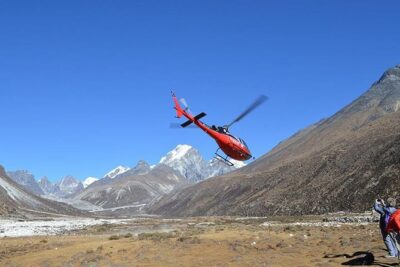
Everest Base Camp Helicopter Tour landing at Hotel Everest View
Read our review →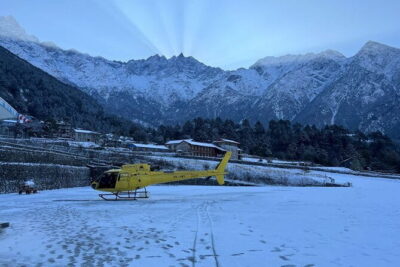
Everest Base Camp helicopter tour with landing
Read our review →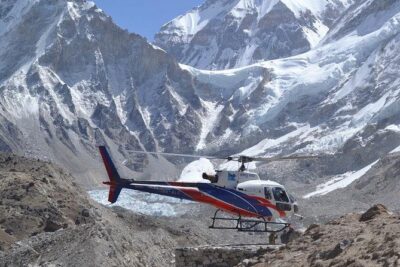
Everest Base Camp Helicopter Tour with Hotel Everest View Landing
Read our review →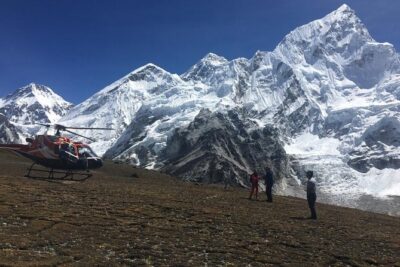
Guaranteed Landing at Everest Base Camp Kalapathar by Helicopter
Read our review →
Everest Base Camp Helicopter Tour landing at Everest View Hotel.
Read our review →
Everest Base Camp Trek with Helicopter Return to Lukla – 10 Days
Read our review →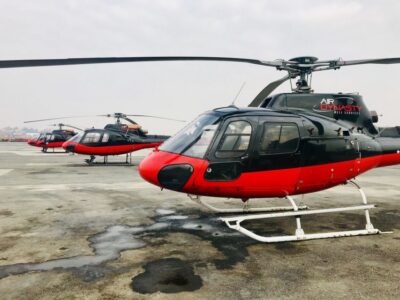
Browse the lists this tour appears in