
REVIEW · EVEREST & HIMALAYA HELICOPTER TOURS
Everest Base Camp Trek with Helicopter Return to Lukla – 10 Days
The return flight changes the whole trek. This 10-day Everest Base Camp journey gives you the classic high-altitude route, then replaces the long walk back with a helicopter ride from Gorakshep to Lukla. I like the smart mix of hard trekking and easier logistics, especially the licensed local guide, permits, guesthouse lodging, and luggage support.
I also like the cultural finish in Kathmandu, where a Nepali dinner and traditional dance mark the end of the trip. The main drawback is the pace: 10 days is a tight schedule for a route that demands careful acclimatization. You need moderate fitness, good insurance, and a willingness to accept changes when mountain weather disrupts flights.
Key points to know before booking
- Gorakshep to Lukla by helicopter: You skip the return trek and gain an aerial view of the route, peaks, and villages below.
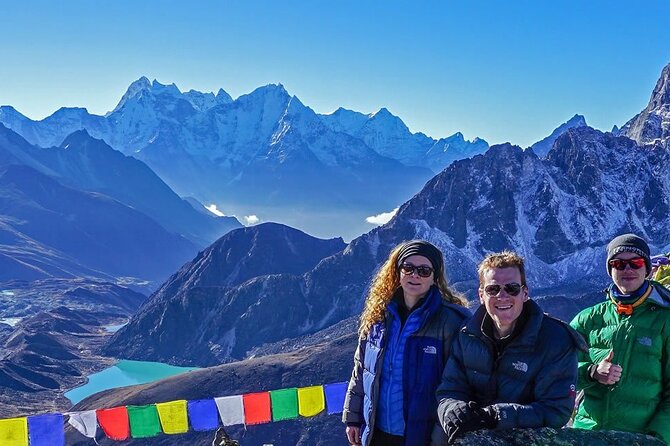
- Kala Patthar sunrise: This uphill viewpoint is one of the trip’s strongest mountain moments, with broad views toward Everest.
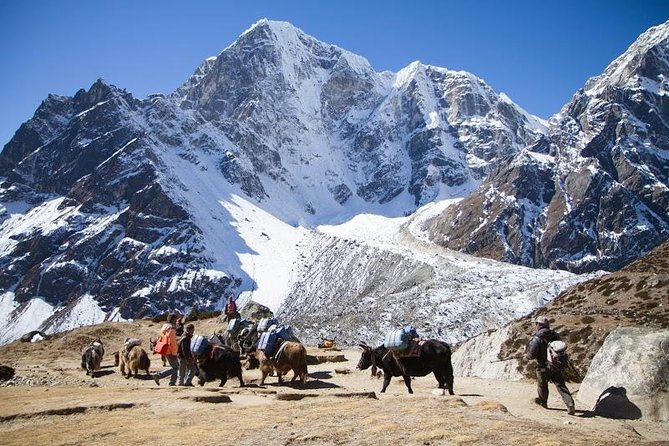
- Sherpa villages and monasteries: Namche Bazaar, Tengboche, and the smaller settlements add culture and daily mountain life to the walk.
- Small maximum group of 15: The group size is large enough for company but still manageable for a mountain guide.
- $799 includes major logistics: Permits, Kathmandu hotel, domestic flights, a guide, standard lodging, a sleeping bag, and the helicopter return are included.
- Several major costs remain: Trek meals, Kathmandu lunches and dinners, insurance, tips, personal spending, and porter service are extra.
What the 10-day route is really asking of you
This is not a sightseeing holiday with a little walking added. You spend several days moving uphill at altitude, on a route that reaches Everest Base Camp and Kala Patthar before the helicopter brings you down toward Lukla.
The reward is variety. The route begins with Kathmandu city life, moves into forest and river valleys, passes through Sherpa communities, and then reaches a stark high-altitude world of rock, snow, and big mountain walls. You get culture, physical challenge, and scenery in one compact package.
The 10-day format saves time compared with a longer standard return trek, but it leaves less room for a slow pace. The schedule includes acclimatization in Dingboche, which is important, yet you should not treat that rest period as a day of total relaxation. You may still walk locally to help your body adjust.
A licensed English-speaking guide matters here. The route is busy in places and the altitude can change how you feel from one morning to the next. Guides praised by name in the supplied material include Ram, Rupak, Dambar, Naren, and Pemba. Ram received especially strong praise for patience, flexibility, organization, and watching the condition of the whole group. Guide assignments can vary, so do not book on the assumption that one particular person is guaranteed.
More Himalaya Helicopter Tours in Kathmandu:
- Everest Base Camp Helicopter Tour landing at Everest View Hotel
★ 5.0 · 668 reviews - Everest Base Camp Helicopter Tour landing at Hotel Everest View
★ 5.0 · 218 reviews - Everest Base Camp Trek with Helicopter Return from Gorakshep to Lukla
★ 5.0 · 161 reviews
Kathmandu arrival and the flight to Lukla
Your trip begins with a private airport transfer from Tribhuvan International Airport in Kathmandu. The stated meeting time is 9:00 am, so make sure your arrival plans fit that schedule or confirm the arrangement before you go.
Kathmandu accommodation is in a three-star hotel with breakfast. This is a practical base rather than a luxury stay. You get a place to recover from your international flight, prepare equipment, and meet the trekking team before heading into the mountains.
The flight to Lukla is one of the trip’s first memorable moments. The package includes domestic flights between Kathmandu or Manthali and Lukla, depending on operating arrangements. That detail matters because flights may use Manthali rather than Kathmandu, which can mean an added transfer requirement. Ask for the exact departure airport and timing before your trip.
Weather affects mountain flights. A delay can alter the first or last day, so avoid planning a tight international connection around the scheduled return. The operator says poor weather can lead to a different date or a full refund if the experience is canceled, but you still need personal flexibility for flight changes.
Lukla to Namche Bazaar, where the route begins to feel real
Lukla is the starting point for the walking portion. From here, the route follows the Dudh Koshi River and passes through forested sections and small Sherpa settlements.
The early part of the trek gives you time to settle into the rhythm. You will be walking on mountain paths, staying in standard guesthouses, and gradually gaining height. The forests and river valley are a welcome contrast to the bare terrain higher up.
Namche Bazaar is one of the most important stops on the route. It is a well-known Sherpa trading center and a natural place to pause before going higher. The town adds a human scale to the trek, with guesthouses, shops, and mountain views arranged around steep slopes.
You should enjoy Namche, but do not mistake the town’s comfort for easy conditions. The route is already gaining altitude, and each uphill section can feel harder than expected. Walk slowly, drink regularly, and let your guide know if you develop a headache, nausea, unusual tiredness, or other altitude concerns.
Tengboche and the cultural heart of the walk
The route continues toward Tengboche, known for its monastery and mountain setting. This stop gives the trek a cultural focus that photographs alone cannot provide.
The monastery is not just a scenic building on the route. It is part of the Buddhist life of the Khumbu region, and your local guide can help explain the customs and religious details you might miss on your own. This is one reason the guide adds real value beyond simply showing you the path.
The approach to Tengboche also brings strong mountain views and changing scenery. Forest gives way to more open high-country surroundings, and the cold becomes more noticeable. Standard guesthouses are included, but you should keep your expectations realistic. This is mountain lodging, not a hotel room in Kathmandu.
The supplied information describes guesthouses as cozy, but comfort at altitude can mean a clean bed, a warm dining room, and a place to rest after walking. Rooms and facilities can be basic. Bring patience, a warm layer, and a sleeping bag, which is included in the package.
More Heli-Hike Trips in Kathmandu:
- Everest Base Camp Trek with Helicopter Return -11 Days
★ 5.0 · 12 reviews - Helicopter Return Everest Base Camp Trek, KTM-LUKLA & Gorakshep-KTM by Heli
★ 5.0 · 9 reviews - Everest Base Camp Trek with Helicopter Return – 10 Days
★ 5.0 · 9 reviews - Everest Base Camp trek with Helicopter return 9 days
★ 5.0 · 8 reviews
Dingboche gives your body time to adjust
Dingboche is the scheduled acclimatization point. This is one of the most important parts of the trip, because the route now reaches a much higher altitude and your body needs time to respond.
Acclimatization does not guarantee that you will feel fine later. It simply gives you a better chance of adjusting before the final approach to Base Camp. The right approach is slowly, slowly, take a rest, a phrase associated with one of the trekking teams in the supplied material and excellent advice for this route.
You may spend the day walking at an easy pace near Dingboche, depending on the guide’s plan and your condition. Do not use this day to prove how strong you are. The goal is to arrive at the next stages with energy left.
The experience is physically demanding even for fit people. The tour asks for a moderate fitness level, but that phrase should not be read as a promise of ease. You need to be comfortable walking for several hours on uneven ground and handling cold, altitude, and repeated uphill sections.
The final approach to Everest Base Camp
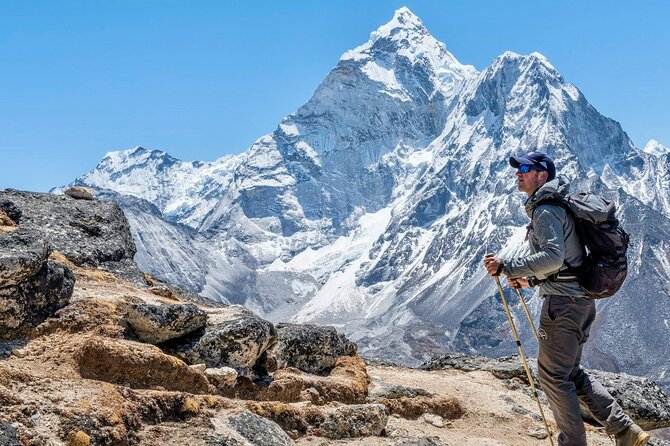
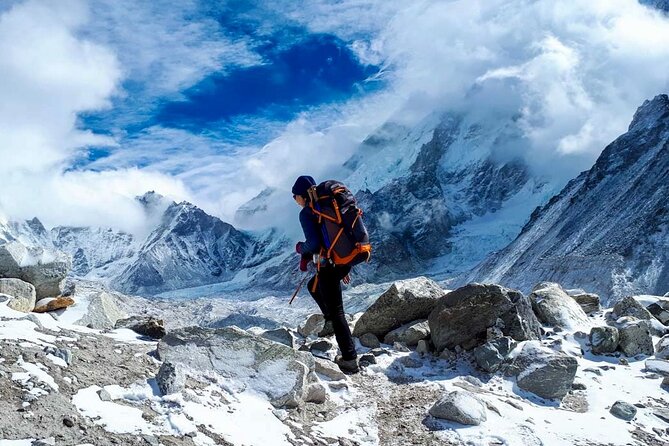
As you leave Dingboche, the scenery becomes less sheltered. Forest drops away, and the route turns toward broad mountain valleys, rocky ground, and high passes of open terrain.
This is where the physical challenge becomes most obvious. The air is thinner, the nights are colder, and a short walk can take more effort than it would at home. Your guide’s job is especially important here, from setting a sensible pace to arranging guesthouse rooms and responding to changes in your condition.
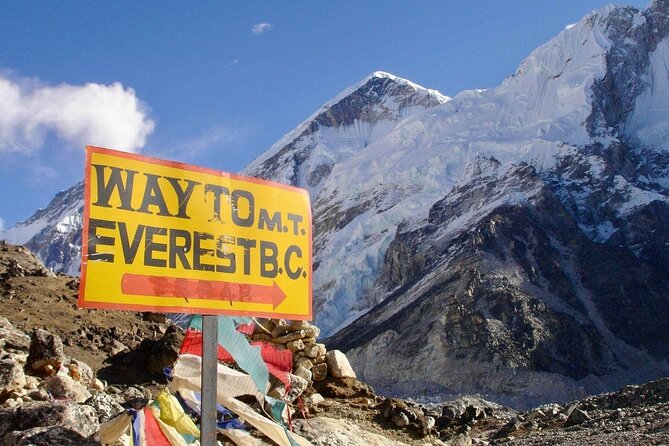
Everest Base Camp is the emotional center of the trek. You reach the place used by climbers preparing for Everest, but the view of Everest itself is not always the main feature from Base Camp. The approach, surrounding peaks, and sense of arriving at a famous expedition point carry much of the meaning.
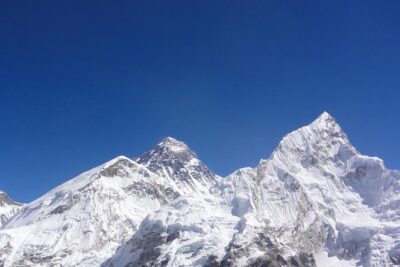
You should also know that reaching Base Camp is not the only major viewpoint. Kala Patthar is included because it gives a more direct and expansive view toward Everest and the surrounding peaks.
Kala Patthar sunrise is worth the early effort
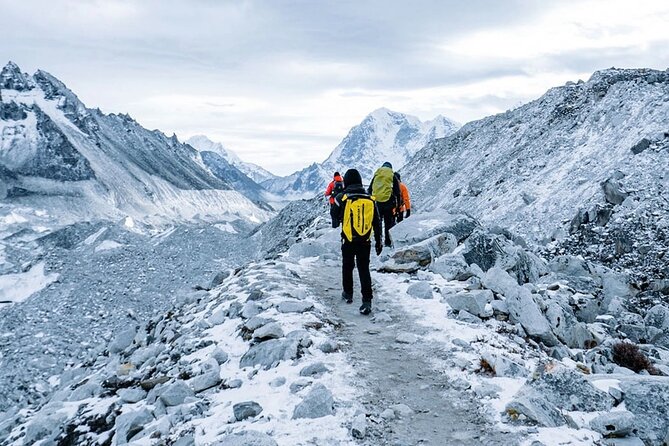
The climb to Kala Patthar is a demanding part of the program, often done early enough for sunrise. The supplied plan describes it as the place for an exceptional Himalayan sunrise, and this is likely to be one of the most rewarding views of the trip.
The climb is short compared with the whole trek, but altitude makes it feel serious. You may be walking before breakfast in cold conditions, so keep your warm clothing accessible and follow the guide’s pacing.
The payoff is a broad mountain panorama and a clear sense of the route you have traveled. This is the point where the walking, the cold, the slow uphill days, and the careful acclimatization come together.
Weather remains the wild card. Clouds can limit the view, and a sunrise plan is never fully guaranteed in the Himalayas. That uncertainty is part of the experience, but it is also why you should keep your expectations grounded.
The helicopter return is the luxury part
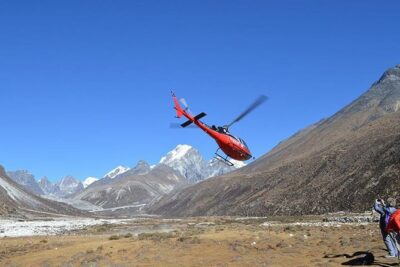
After reaching the high point of the trek, the helicopter takes you from Gorakshep to Lukla. This is the defining feature of the package and the reason the trip can fit into 10 days.
The flight gives you a completely different view of the route. From the ground, you notice each slope, bridge, village, and turn in the path. From the air, the route becomes a connected sweep of valleys and high mountain terrain. It is a useful visual finale, not just a quick ride back.
It also removes the need to retrace several days of walking. That makes the package appealing if you want the Everest Base Camp experience but do not want to spend additional time descending through the same villages.
Still, the helicopter is not a magic escape from mountain logistics. Weather can affect helicopter operations, and the schedule may change. The package includes the helicopter ride from Gorakshep to Lukla, but you should ask how delays are handled and how the onward flight to Kathmandu or Manthali connects.
The helicopter return also changes the physical profile of the trek. The hardest walking is still ahead of you before the flight, but you avoid the long descent that can be rough on knees and feet. I see this as a practical luxury rather than an unnecessary extra.
Kathmandu farewell and what the price includes
After the mountain section, you return to Kathmandu for a farewell dinner with Nepali food and traditional dance. This is a pleasant way to mark the end of a demanding trip and gives the journey a cultural finish rather than ending at an airport.
At $799 per person, the package has strong value if you use the included services. The price covers private arrival and departure transfers, a three-star Kathmandu hotel with breakfast, national park and trekking permits, domestic flights, standard guesthouses, a licensed guide, trekking equipment, a medical kit, the helicopter ride, government fees, and the farewell dinner.
The helicopter is the key value point. A normal return trek would require more days of lodging, meals, guiding, and walking. Here, you pay for a quicker return and a memorable aerial view.
But $799 is not your complete trip budget. You still pay for international flights, a Nepal visa, lunch and dinner in Kathmandu, all meals during the trek, travel insurance, optional porter service, tips, snacks, drinks, laundry, and other personal spending.
A porter is optional, with one porter for two trekkers recommended. If you are not used to carrying a pack at altitude, this is an expense worth considering rather than dismissing. The package includes a duffel bag and sleeping bag, but those items do not remove the need to budget for other gear or personal clothing.
Who should book this Everest trek
I would recommend this trip to you if you want the classic Everest Base Camp route but have limited time. It suits people who value a local guide, organized permits, arranged transport, and the comfort of flying out instead of walking back.
It is also a good match if you like mixing physical effort with a few convenient touches. The helicopter, hotel, airport transfers, duffel bag, sleeping bag, and farewell dinner make the trip easier to manage without turning it into a soft adventure.
You should think twice if you want a relaxed high-altitude schedule. Ten days is efficient, but it is not generous. You also need insurance that covers medical treatment and high-altitude evacuation. That requirement is essential, not optional paperwork.
The maximum group size is 15. That should allow a guide to keep track of the group, though the experience will not feel private if the group reaches its limit. Solo participants can enjoy the company, while couples and friends should be ready to share the trail with others.
Practical questions to settle before departure
Confirm whether your outbound flight uses Kathmandu or Manthali. That affects your ground arrangements and morning schedule.
Ask what happens if bad weather delays the Lukla flight or helicopter. Mountain aviation is weather dependent, and a flexible plan protects you from unnecessary stress.
Pack for cold nights and changing conditions. The sleeping bag helps, but the supplied information does not say that all personal clothing or technical equipment is provided.
Plan your cash for food and personal expenses. Trek meals are not included, and snacks or drinks can become a regular part of your budget during a 10-day mountain trip.
Cancellation is free if you cancel at least 24 hours before the start time. Changes or cancellations inside that window are not accepted for a refund. The local cut-off time applies.
Should you book it?
Book this Everest Base Camp trek if you want the famous route, strong local support, and a helicopter finish without committing to a longer return walk. The most appealing combination is the guide-led trek, Kala Patthar sunrise, and aerial return from Gorakshep.
I would not book it without checking your insurance, fitness, meal budget, flight arrangements, and tolerance for a fast schedule. If those pieces work for you, $799 is a sensible price for the included permits, lodging, guide, transport, and helicopter ride.
For the right person, this is a practical way to reach Everest Base Camp, see Sherpa country on foot, and finish with one last dramatic view from the air.
FAQ
How long is the Everest Base Camp trek with helicopter return?
The experience lasts approximately 10 days.
Where does the experience start?
It starts at Tribhuvan International Airport in Kathmandu, Nepal. The stated start time is 9:00 am.
Is the helicopter ride included?
Yes. The package includes a helicopter ride from Gorakshep to Lukla.
Are meals included?
Breakfast is included at the three-star Kathmandu hotel. Lunch and dinner in Kathmandu, along with all meals during the trek, are not included.
Is a porter included?
No. Porter service is optional. One porter for two trekkers is recommended.
What happens if bad weather cancels the experience?
If poor weather causes the experience to be canceled, you will be offered a different date or a full refund.
Just added around Kathmandu
- Mount Everest Helicopter Tour with Landings★ 5.0 · 2 reviews
- Day Tour to Everest Base Camp By Helicopter★ 5.0 · 16 reviews
- Mount Everest Scenic Helicopter Tour★ 5.0 · 6 reviews
- Guaranteed Landing at Everest Base Camp Kalapathar by Helicopter★ 5.0 · 38 reviews
- Kathmandu To Lukla By Helicopter Flight★ 5.0 · 6 reviews
- Everest Base Camp Helicopter Tour with Hotel Everest View Landing★ 5.0 · 52 reviews
- Langtang Helicopter Tour★ 5.0 · 6 reviews
- Himalayan Gosaikunda Helicopter Tour from Kathmandu★ 4.5 · 3 reviews
Everest & Himalaya Helicopter Tours, compared.
Everest Base Camp Helicopter Tour landing at Hotel Everest View
Read our review →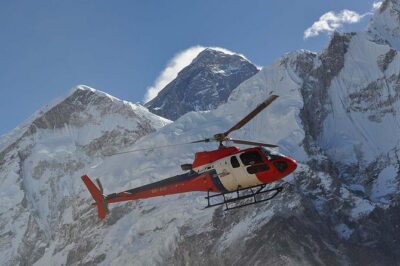
Everest Base Camp Trek with Helicopter Return from Gorakshep to Lukla
Read our review →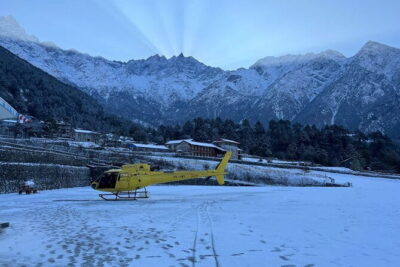
Everest Base Camp helicopter tour with landing
Read our review →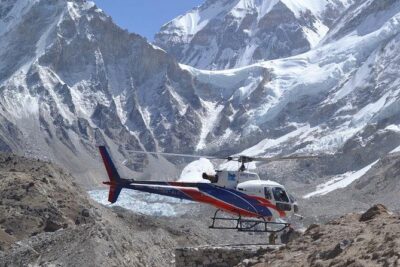
Everest Base Camp Helicopter Tour with Hotel Everest View Landing
Read our review →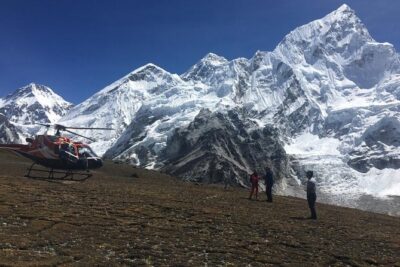
Guaranteed Landing at Everest Base Camp Kalapathar by Helicopter
Read our review →
Everest Base Camp Helicopter Tour landing at Everest View Hotel.
Read our review →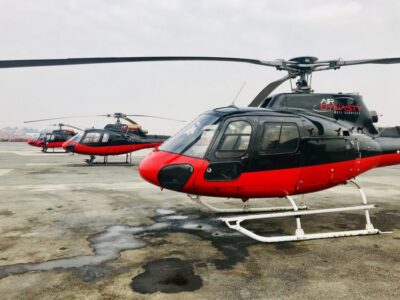
Browse the lists this tour appears in