
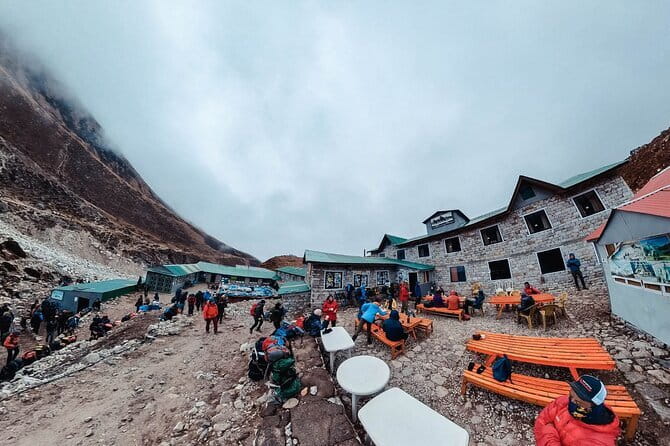
REVIEW · EVEREST & HIMALAYA HELICOPTER TOURS
Everest Base Camp trek with Helicopter return 9 days
Everest in nine days, with the long walk home removed. This private trek combines a gradual approach to Everest Base Camp with a helicopter flight from Gorakshep to Lukla, then onward to Kathmandu. I like the time-saving design and the careful altitude break in Namche Bazaar. The main concern is simple: the schedule is short, the high-altitude walking is demanding, and the helicopter return can depend on mountain weather.
I also like that the package covers a guide, porter service, permits, meals, airport transfers, and altitude checks with an oximeter twice daily. At $3,888 per person, it is not a budget trek, but the price includes several costly pieces of a Himalayan trip. You still need to budget for drinks, showers, charging, tips, insurance, visa costs, and some food in Kathmandu.
Key points before you book
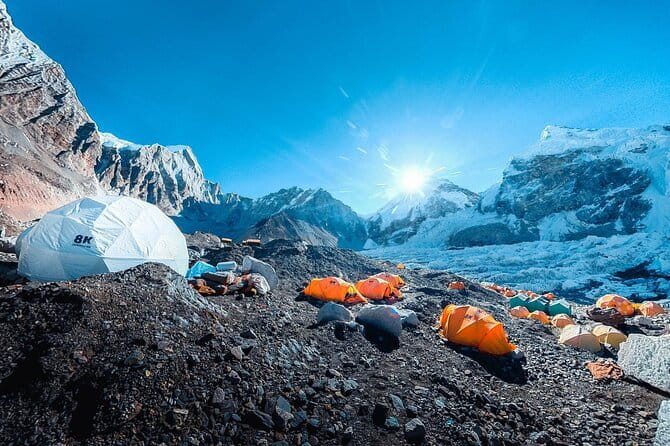
- Seven full mountain days: The route gives you a compact but serious walk through the Khumbu region before the return flight.
- Acclimatization in Namche: A rest day includes a walk toward Khumjung and the Everest View Hotel, an important pause before higher ground.
- Kala Patthar at 5,644 meters: The sunrise climb provides the main high viewpoint, with broad views toward Everest and surrounding peaks.
- Helicopter from Gorakshep: You avoid the long descent on foot, though weather and flight conditions can affect timing.
- Private group format: Only your own group takes part, with a guide and one porter shared between two people.
- Health checks included: An oximeter is used twice each day to check pulse, oxygen saturation, and heart rate.
What this nine-day route really offers
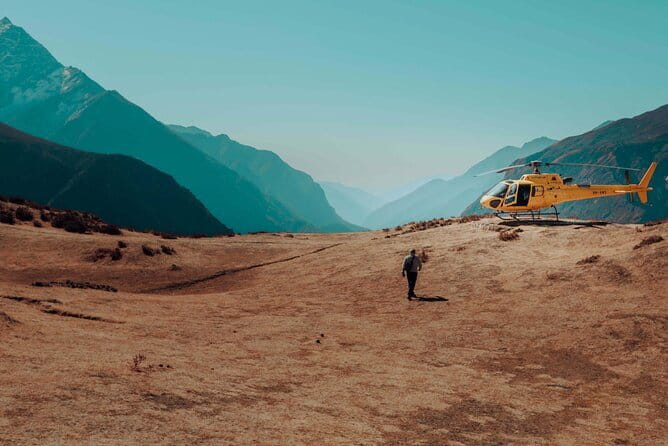
This is a compressed Everest Base Camp experience. You fly from Kathmandu to Lukla, walk upward through Phakding, Namche Bazaar, Tengboche, Dingboche, Lobuche, and Gorakshep, then reach Kala Patthar before flying out.
The route is described as moderate, but that word needs some care. You do not need technical climbing skills, yet the altitude makes ordinary walking much harder. Once you pass Dingboche at about 4,410 meters, the path becomes steeper and more remote. The long day toward Gorakshep can take about eight hours, followed by an early climb to Kala Patthar.
The biggest comfort is the helicopter return. A normal Everest Base Camp trek requires several days of downhill walking after the high point. Here, you see the Khumbu region on foot and return by air. That makes the trip attractive if you have limited time, dislike prolonged descents, or want to reduce the total number of days away.
It also means you miss part of the slower rhythm of a full trek. The lower trail is not only a way to reach the mountain. It is where you pass villages, forests, bridges, monasteries, and working mountain communities. Nine days gives you a strong taste, but not the full unhurried experience.
More Himalaya Helicopter Tours in Kathmandu:
- Everest Base Camp Helicopter Tour landing at Everest View Hotel
★ 5.0 · 668 reviews - Everest Base Camp Helicopter Tour landing at Hotel Everest View
★ 5.0 · 218 reviews - Everest Base Camp Trek with Helicopter Return from Gorakshep to Lukla
★ 5.0 · 161 reviews
Day 1: Kathmandu arrival and a useful reset
An airport team meets you at the international terminal, transfers you to your hotel by private car, and helps with bags and check-in. After rest, you meet the main team and prepare for the trek.
This first day is practical rather than scenic. Use it to check your clothing, arrange personal items, and ask the guide about the walking schedule. You will want easy access to warm layers, water, medication, and any documents needed for the mountain flights.
The private airport transfer is a small but welcome benefit after an international flight. You are not left to negotiate transport while tired. Food in Kathmandu at lunch and dinner is not included, so allow for those meals separately.
Day 2: The short flight to Lukla and the first walk
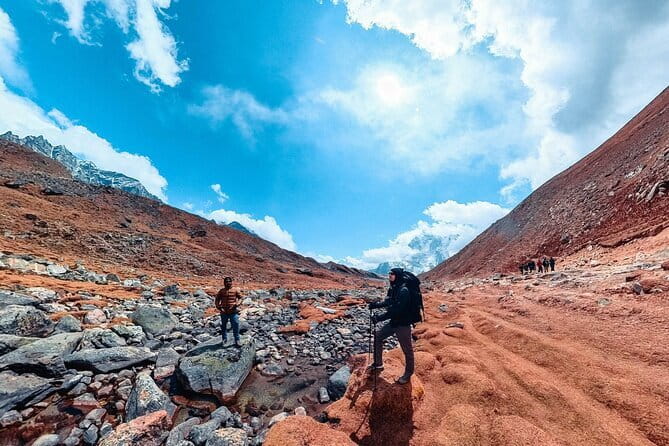
The morning begins with a flight from Kathmandu to Tenzing Hillary Airport in Lukla. The flight is short and provides mountain views, but the important point is that Lukla is the trailhead for this route.
From Lukla, porters join the group and you begin walking. The supplied schedule describes about four hours of activity, though the exact overnight point is not fully clear in the details provided. The next day begins from Phakding, so this first walking section is the gentle opening of the trek rather than a major altitude test.
Lukla can feel like a sudden change from city life. You move quickly from airport procedures to foot travel, with bags handed into the care of the support team. Keep your daypack light and useful. Your porter carries the main load, but you should still carry anything you may need during the day.
The Kathmandu to Lukla flight is included in the price, as is the return helicopter connection from Gorakshep to Lukla. That is important because mountain transport can make up a large part of the cost of a Nepal trip.
Day 3: Phakding to Namche Bazaar
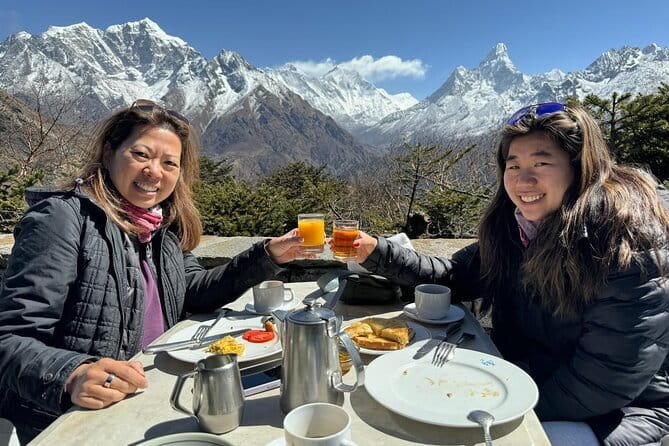
This is a fuller walking day, listed at about six hours. From Phakding, the route passes through rhododendron and magnolia forest toward Toktok, at about 2,760 meters.
The route then continues toward Monjo, with bridge crossings near Bengkar Village. These early sections introduce the classic Khumbu trail: forest, river valleys, suspension bridges, stone paths, and steady uphill walking. The final approach to Namche Bazaar is the serious part of the day.
Namche is the main trading center of the Khumbu region and an important staging point for higher trekking. Reaching it is a satisfying change from the lower forest. You may find the altitude noticeable here, even though the town is still well below Kala Patthar.
The six-hour estimate is reasonable as a guide, not a promise. Stops, trail conditions, group pace, and how your body handles the height can change the day. Walk slowly from the beginning. Saving energy now matters more than arriving early.
More Heli-Hike Trips in Kathmandu:
- Everest Base Camp Trek with Helicopter Return to Lukla – 10 Days
★ 5.0 · 34 reviews - Everest Base Camp Trek with Helicopter Return -11 Days
★ 5.0 · 12 reviews - Helicopter Return Everest Base Camp Trek, KTM-LUKLA & Gorakshep-KTM by Heli
★ 5.0 · 9 reviews - Everest Base Camp Trek with Helicopter Return – 10 Days
★ 5.0 · 9 reviews
Day 4: Acclimatization around Namche and Khumjung
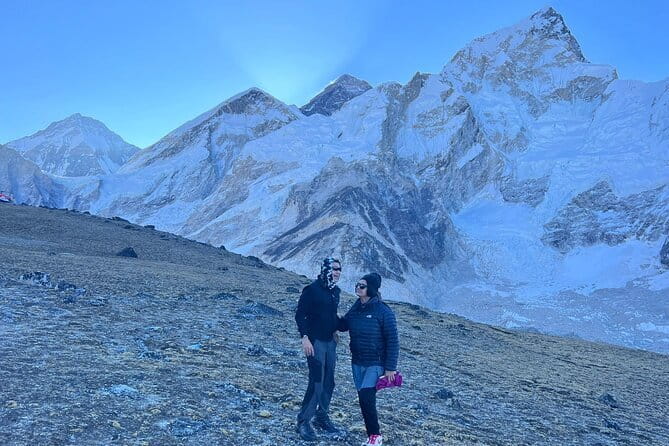
The rest day in Namche is one of the strongest parts of the plan. You do not simply sit in the lodge. The schedule includes a walk toward the Syangboche airstrip and the Everest View Hotel, with Khumjung also listed as a stop.
This kind of short climb and return helps your body adjust while keeping you active. It also gives you a first strong look toward the high peaks. The five-hour activity estimate makes this more than a lazy morning, so keep your pace comfortable.
The rest day is especially valuable because the following days take you above 3,500 meters and then higher still. A rushed schedule often causes trouble when people try to gain height too quickly. Here, the pause at Namche gives you a better chance to continue safely.
You should also use this day to speak plainly with your guide about headache, nausea, unusual tiredness, or poor sleep. The support team carries an oximeter and checks pulse, oxygen saturation, and heart rate twice daily. Those checks are useful, but they do not replace honest communication about how you feel.
Day 5: Namche to Kyangjuma
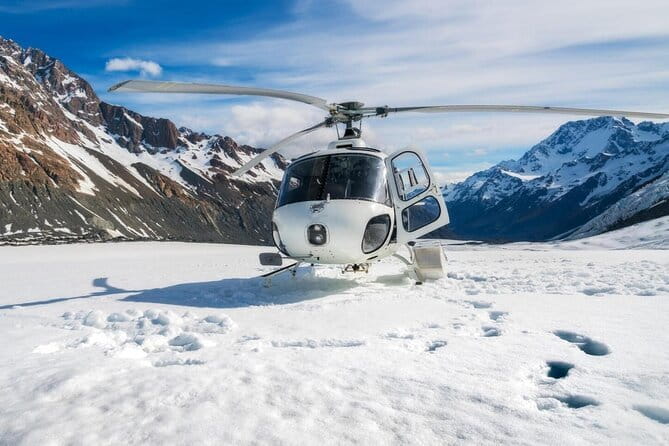
The route continues from Namche toward Kyangjuma, at about 3,550 meters. This section is listed at about five hours and is described as an uphill trail with mountain views.
Kyangjuma is a useful overnight point because it keeps the altitude gain gradual. The walking is not yet as severe as the route beyond Dingboche, but you are now spending the night considerably higher than Namche.
The trail rises and falls rather than climbing in one perfectly steady line. That can be tiring because a descent feels like lost progress, even though it is part of normal mountain travel. Keep your breathing even and avoid racing stronger members of the group.
This is also a day when the porter arrangement becomes noticeable. One porter is provided for every two people, so pack with restraint. The included service is generous enough for a normal trekking load, but it is not a reason to bring a full suitcase into the mountains.
Day 6: Tengboche and a sunrise start
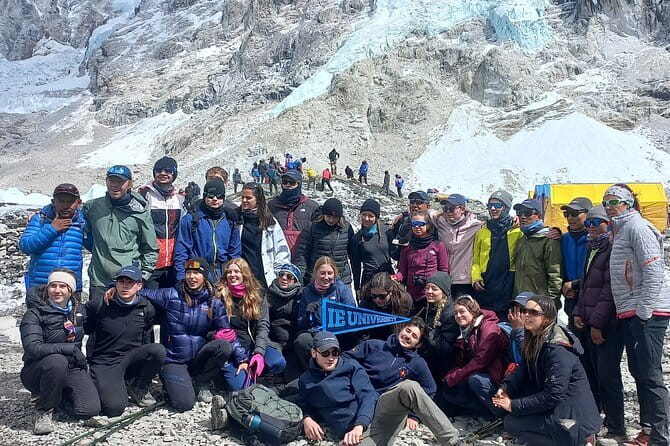
The schedule places Tengboche on this day, with about five hours of walking. An early start is planned for sunrise, followed by breakfast and a descent through rhododendron forest toward Deboche, at about 3,320 meters.
Tengboche is one of the best-known stops on the route. The setting combines forest, open mountain views, and a major monastery area. The morning light can make the surrounding peaks especially striking, so this is a good day to keep your camera ready.
The route includes a descent toward Deboche before continuing through the valley. Downhill walking can feel easy at first, but uneven stone paths still demand attention. Trekking poles can be useful, though they are not listed as included equipment.
The five-hour estimate leaves time to absorb the setting rather than simply march through it. Still, altitude and repeated walking days can make the afternoon slower. Take advantage of the guide’s pace and do not treat a scheduled walking time as a target to beat.
Day 7: Higher ground near the Khumbu Glacier
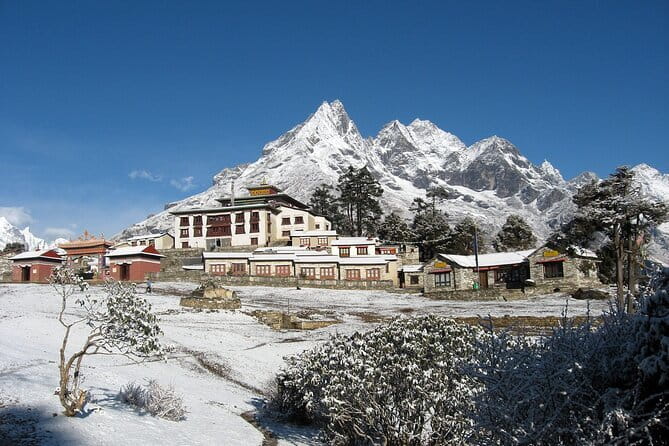
This is the point where the character of the trek changes. The route rises beyond Dingboche, at about 4,410 meters, and moves toward the Khumbu Glacier area. The day is listed at about six hours.
The surroundings become more open, rockier, and less sheltered by forest. From the ridge above Dingboche, you can see Cholatse and Tawache. The trail gains height gradually at first, but the air is thinner and every uphill section takes more effort.
The Khumbu Glacier is one of the defining features of the Everest route. Walking near it gives you a direct sense of the scale and force of the high mountain environment. This is not a polished attraction with easy paths. Expect rough ground, cold air, and a pace shaped by altitude.
The supplied schedule places the glacier section on Day 7, but it does not fully spell out each overnight village between Dingboche, Lobuche, and Gorakshep. Ask for the exact sleeping points before departure. That information matters because you will want to know where the longest day begins and how much height you gain between nights.
Day 8: Lobuche to Gorakshep and the big walking day
This is the hardest day listed, at about eight hours. From Lobuche, you follow the broad valley toward Gorakshep. The path begins as a rocky route and grows steeper as you gain height.
Gorakshep is the final settlement before the high viewpoints and base camp area. The walk is demanding because of both distance and altitude. You may find yourself taking frequent short breaks, which is normal and sensible.
The schedule says the route includes walking around Gorakshep and the Everest Base Camp area. The exact order of Gorakshep and Base Camp is not fully detailed, so confirm whether the Base Camp walk happens on this afternoon or during the following morning.
This is where the trip’s support system matters most. Your guide handles the pace and route, the porter keeps the main load off your back, and the health checks provide an extra way to monitor your condition. You still need personal travel and medical insurance. Neither the guide nor the included first-aid kit replaces that protection.
The helicopter return begins from Gorakshep, so the location is both a destination and a transport point. If the weather delays the flight, the operator may need to adjust the departure timing. The package includes the helicopter flight, but no mountain flight can ignore weather conditions.
Day 9: Kala Patthar and the helicopter back
The final morning begins early with the climb from Gorakshep to Kala Patthar, listed at 5,644 meters. The trail is well used and easy to follow, but the height makes the climb tough.
The reason for the early start is light. The first sun can turn the peaks golden, and Kala Patthar provides one of the best viewpoints on this route. You should not think of this as a quick photo stop. It is a real uphill effort at extreme altitude, followed by a return to Gorakshep.
After the high viewpoint, the helicopter takes you from Gorakshep to Lukla. The included flight from Lukla to Kathmandu completes the return plan, although the package description does not give a detailed landing schedule for the final city transfer.
This last day packs a lot into one morning. The reward is clear: instead of walking several days down the same valley, you see the mountains from above and save your knees. The tradeoff is less flexibility. Weather, visibility, and aircraft operations can affect the flight, so keep your final plans in Kathmandu flexible.
What the $3,888 price includes
The cost is high compared with a basic tea-house trek, but it covers more than just walking. Included services are:
- Private airport and ground transfers
- Kathmandu to Lukla and Lukla to Kathmandu flights
- Helicopter from Gorakshep to Lukla
- Experienced guide with salary, meals, lodging, transport, and insurance
- One porter for every two people
- Trekking permits and required government fees
- Breakfast, lunch, and dinner for eight days
- First-aid kit and twice-daily oximeter checks
- Trip completion certificate
- Government taxes and official charges
That is a substantial package. The helicopter return alone changes the price calculation, and private transport and support staff add convenience. I would view the cost as fair for someone who values time, a private group, and a supported high-altitude route.
You still pay for Kathmandu lunches and dinners, visa costs, international flights, personal expenses, insurance, drinks, desserts, showers, charging, and tips. Tea-house hot showers and phone charging cost about $2 to $5, and tipping the guide, porter, and driver is expected.
Guides, support, and the human side
The strongest praise connected with this company focuses on airport help, guide care, planning, and practical support. Names associated with positive experiences include Raj, Ramesh, Sital, and Ganesh, though you should confirm who will lead your particular departure.
Raj was praised for making the process easier and more efficient. Ramesh received strong praise for helping during the Everest trek, while Sital was described as friendly and experienced on an Annapurna trip. Ganesh was praised for support on the Langtang route. These details suggest a company used to handling different trekking styles, but they do not guarantee a particular guide for your group.
The private format is a real advantage. You are not tied to a large mixed group with a fixed pace. You can ask for a slower rhythm, discuss symptoms sooner, and spend more time at a viewpoint if the schedule allows.
Who should book this trek?
I would recommend it to you if you have limited holiday time but still want the main Everest route, a high viewpoint, and a helicopter return. It also suits people who prefer private arrangements and want meals, permits, airport transfers, guide costs, and porter support handled together.
It is less suitable if you want a relaxed cultural trek with many spare days. The nine-day plan leaves little room for delays, and the high sections require solid fitness. The operator asks for a moderate fitness level, but the long days above 4,000 meters are the real test.
You should also think carefully if you dislike uncertainty. Lukla flights and the Gorakshep helicopter depend on conditions outside the operator’s control. The trip is best approached with a flexible attitude and extra time around the arrival or departure from Nepal.
Should you book the Everest Base Camp helicopter return?
Book it if the helicopter return is central to your plan, you want a private group, and you are comfortable paying for speed and support. The schedule gives you Namche acclimatization, Tengboche, the Khumbu Glacier area, Base Camp, and Kala Patthar without requiring the long walk back down.
I would ask for three details before paying: the exact overnight stops on Days 7 and 8, the planned order of Base Camp and Kala Patthar, and the backup plan if the helicopter cannot fly from Gorakshep. If the answers are clear, this is a strong choice for a time-conscious trekker who wants the essential Everest experience with less downhill walking.
The cancellation terms are generous only up to a point. You receive a full refund when cancelling at least 24 hours before the start time. Cancellations or changes made within 24 hours are not refunded or accepted.
FAQ
How long is the Everest Base Camp helicopter return trek?
The experience lasts approximately nine days, including arrival in Kathmandu, the mountain trek, the Kala Patthar climb, and the return flights.
What is the price per person?
The listed price is $3,888 per person.
Is airport pickup included?
Yes. An airport team meets you at the international terminal, transfers you to the hotel in a private car, and helps with luggage and check-in.
Is the Kathmandu to Lukla flight included?
Yes. The package includes the flight from Kathmandu to Lukla and the return flight from Lukla to Kathmandu.
Is the helicopter flight included?
Yes. A helicopter flight from Gorakshep to Lukla is included.
How high is Kala Patthar?
Kala Patthar is listed at 5,644 meters, or 18,519 feet.
Is an acclimatization day included?
Yes. Day 4 is a rest and acclimatization day in Namche Bazaar, with a walk toward Khumjung, Syangboche, and the Everest View Hotel.
Are meals included during the trek?
Breakfast, lunch, and dinner are included for eight days. Lunch and dinner in Kathmandu are not included.
Is porter service included?
Yes. One porter is included for every two people.
What happens if I cancel?
You receive a full refund if you cancel at least 24 hours before the experience start time. Cancellation within 24 hours does not qualify for a refund, and changes within that period are not accepted.
Just added around Kathmandu
- Day Tour to Everest Base Camp By Helicopter★ 5.0 · 16 reviews
- Mount Everest Helicopter Tour with Landings★ 5.0 · 2 reviews
- Mount Everest Scenic Helicopter Tour★ 5.0 · 6 reviews
- Guaranteed Landing at Everest Base Camp Kalapathar by Helicopter★ 5.0 · 38 reviews
- Kathmandu To Lukla By Helicopter Flight★ 5.0 · 6 reviews
- Everest Base Camp Helicopter Tour with Hotel Everest View Landing★ 5.0 · 52 reviews
- Langtang Helicopter Tour★ 5.0 · 6 reviews
- Himalayan Gosaikunda Helicopter Tour from Kathmandu★ 4.5 · 3 reviews
Everest & Himalaya Helicopter Tours, compared.
Everest Base Camp Helicopter Tour landing at Hotel Everest View
Read our review →
Everest Base Camp Trek with Helicopter Return from Gorakshep to Lukla
Read our review →
Everest Base Camp helicopter tour with landing
Read our review →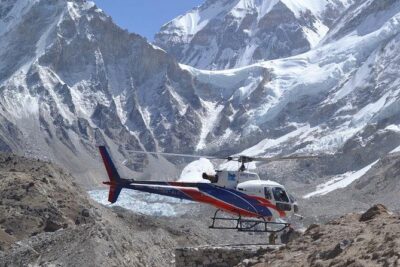
Everest Base Camp Helicopter Tour with Hotel Everest View Landing
Read our review →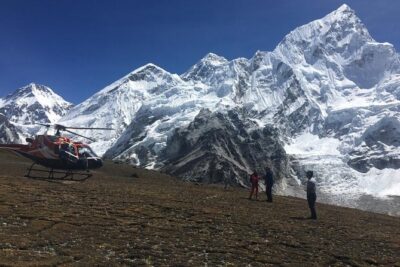
Guaranteed Landing at Everest Base Camp Kalapathar by Helicopter
Read our review →
Everest Base Camp Helicopter Tour landing at Everest View Hotel.
Read our review →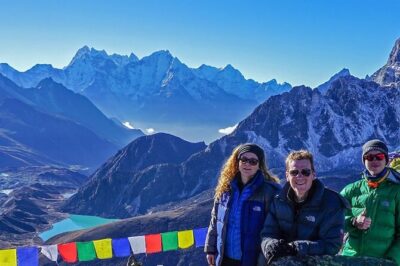
Everest Base Camp Trek with Helicopter Return to Lukla – 10 Days
Read our review →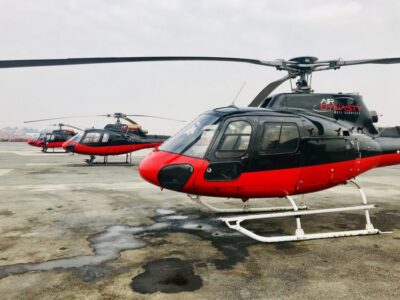
Browse the lists this tour appears in