
REVIEW · GLACIER & SNOW LANDING HELICOPTER TOURS
Mount Cook: 3-Hour Tasman Glacier Helicopter Ride and Hike
Ice caves, mountain peaks, and a helicopter ride: this is Mount Cook at its most dramatic. The three-hour Tasman Glacier heli-hike combines two scenic flights with up to two hours on New Zealand’s biggest glacier. I especially like the close look at blue ice formations and the care taken with equipment, guides, and safety. The main drawback is clear: at $537 per person, this is a major expense, and bad weather can cancel the whole outing.
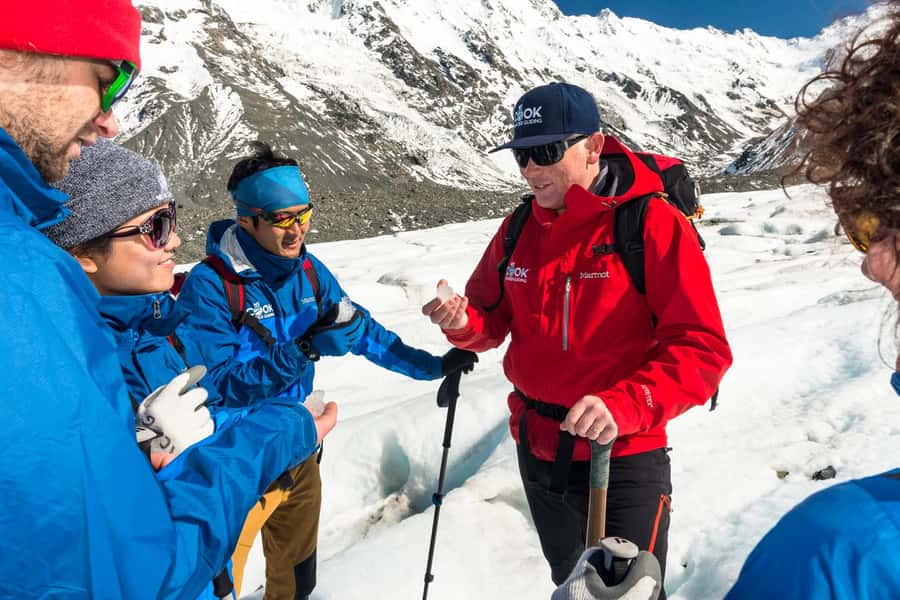
You meet at the Mt Cook Glacier Guiding desk inside Mount Cook Airport, then prepare for a small-group trip of no more than 11 people. Guides such as Hunter, Anna, Tori, Rich, and Kirsten have been praised for clear explanations, photo help, and calm leadership. You should also know that the glacier route changes with the ice, so a spectacular cave or moulin may be available one day and gone the next.
Key points to know before you book
- Two helicopter flights: Fly from Mount Cook Airport to a remote Tasman Glacier landing point, then return by air after the hike.
- Up to two hours on the ice: Your guide cuts steps, fits crampons, and leads you through changing ice formations.
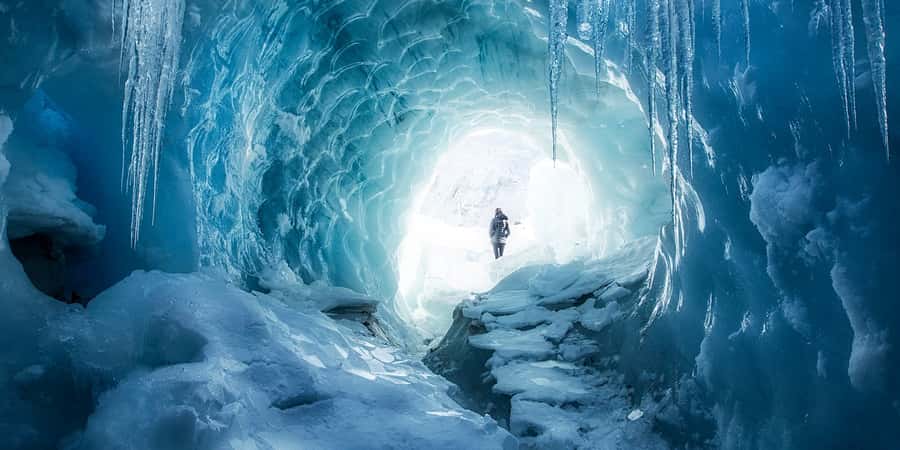
- Blue caves and moulins: Depending on conditions, you might enter ice caves, tunnels, or a moulin, a deep shaft formed by meltwater.
- Small groups matter: The group limit is 11, and several guides have made a point of helping solo visitors and slower walkers.
- Weather controls the day: Clear skies can produce a superb flight, but cloud and wind can force a delay or cancellation.
- Useful gear is supplied: Leather boots, wool socks, crampons, a walking pole, and a waterproof jacket are included.
Why the Tasman Glacier heli-hike is special
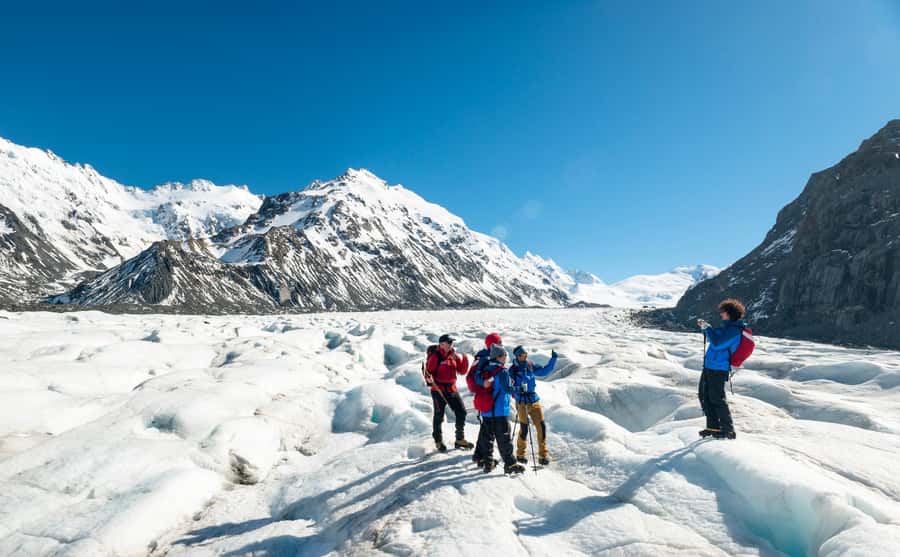
Many Mount Cook activities show you the mountains from a road, a trail, or a viewpoint. This one changes your position twice: first you rise above the ice in a helicopter, then you walk across it. That contrast is the heart of the experience.
From the air, the glacier becomes a huge field of folds, ridges, snow, and blue-white ice. On foot, it becomes much more personal. You notice cracks, small streams, rough walls, and the strange shapes made as the ice moves and melts. The guides point out fresh formations and cut steps where needed, so the route is not a fixed walk through a permanent attraction.
That changing route gives the trip an honest sense of adventure. You are not visiting an ice museum. The glacier is always shifting, and the guide has to choose what is safe and interesting on that particular day.
I also like the small-group format. A maximum of 11 people is not private, but it is manageable. Guides have helped solo visitors take photos, adjusted their pace for different abilities, and answered questions about the glacier’s geology. That personal attention matters when you are wearing unfamiliar gear on uneven ice.
More Glacier Helicopter Tours in New Zealand
- Franz Josef Glacier: Helicopter Flight & Alpine Landing
★ 4.8 · 619 reviews - Franz Josef Glacier Heli-Hike
★ 4.5 · 618 reviews - Heli Hike Fox Glacier
★ 5.0 · 563 reviews
Starting at Mount Cook Airport
Your meeting point is inside the Mount Cook Airport terminal, at the Mt Cook Glacier Guiding desk. The tour offers two listed starting times, 8:45 AM and 10:45 AM, although you should check availability for the date you want.
The first part is a 45-minute safety briefing. This may sound long beside a three-hour tour, but it is useful preparation. You learn how the flight and glacier portion work, receive your equipment, and get instructions for walking safely with crampons.
Allow time to get dressed and listen carefully. The supplied gear includes leather boots, woolen socks, crampons, a walking pole, and a waterproof jacket. One account also notes that additional items such as raincoats and backpacks were available. Bring warm clothing, sunglasses, and a hat, but ask the staff what they want you to wear under the provided layers.
The briefing is also where the group begins to understand the limits of the day. The glacier route depends on ice conditions, and the flight depends on the weather. A clear morning can turn cloudy quickly in the Mount Cook area. That is not a flaw in the operation, but it is part of booking an activity in a high mountain environment.
The first 15-minute helicopter flight
After the briefing, the first scenic flight takes about 15 minutes. The helicopter carries you from Mount Cook Airport toward a remote part of the Tasman Glacier, where you begin the walk.
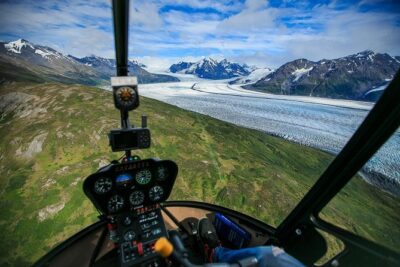
This short flight is not just transport. You get an aerial view of Aoraki/Mount Cook and the surrounding mountain country before landing on the ice. Pilots have been praised for pointing out landmarks and helping people feel secure, while several participants noted smooth flights and excellent visibility when conditions were clear.
The flight itself is weather dependent, so you should not treat the aerial views as guaranteed. Cloud, wind, or poor visibility may affect the route or stop the tour from operating. The company offers free cancellation up to 24 hours before departure, and if weather disrupts the plan, rescheduling may be offered when another time is available. Still, you should leave flexibility in your Mount Cook schedule if this is a priority.
Seating arrangements can vary. One group of six reported that everyone had a window view, while another person paid extra for front seats and felt the view was better. Ask about seating options if aerial photography is especially important to you.
Walking on the Tasman Glacier
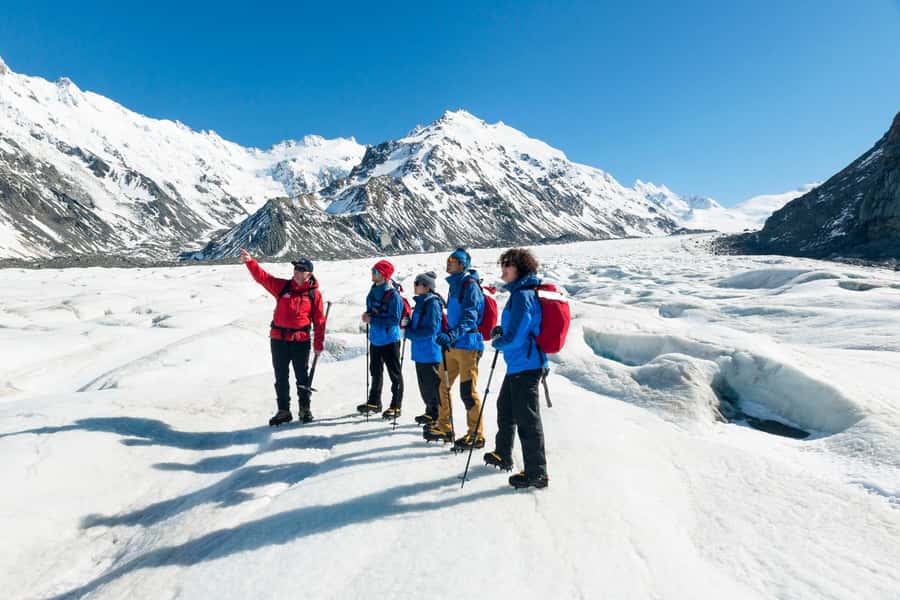
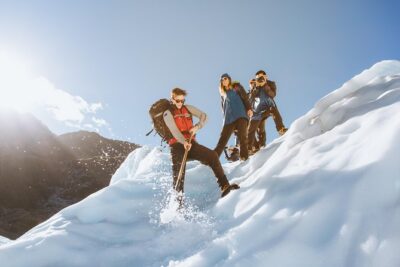
The landing is the moment the activity changes from scenic flight to guided ice walk. You put on crampons, take a walking pole, and follow your guide across the glacier.
You do not need to arrive as an expert hiker. The walk is guided, and steps are cut into the ice where necessary. Several people described the activity as manageable for a range of ability levels, but it is still a physical outing. You may need to walk carefully on uneven surfaces, crouch, crawl, or step into narrow formations.
The route can include ice tunnels, caves, crevasses, moulins, and meltwater features. Some people were able to walk into blue caves, squeeze through tunnels, or enter a moulin. Others saw waterfalls, glacier streams, or freshly formed ice features. These details cannot be promised because the glacier is always changing, but they explain why the walk feels more memorable than simply standing on a patch of snow.
One particularly useful detail is that the guide does not just point out the ice. The guide may cut steps and choose the route as the group moves. That makes the experience feel active and helps explain why the same excursion can offer different sights on different days.
Same place, a different flight path:
- Franz Josef: 35min Helicopter Trip over Two Glaciers
★ 4.8 · 451 reviews - Mount Cook: Scenic Helicopter Flight with Alpine Landing
★ 4.8 · 442 reviews - Franz Josef & Fox Glaciers Helicopter Flight & Snow Landing
★ 4.7 · 342 reviews - Franz Josef: 2.5 Hour Glacier Hike with Helicopter Transfer
★ 4.7 · 322 reviews
Blue ice, moulins, and the sound of moving ice
The ice formations are the main reason to choose this tour over a standard helicopter flight. Blue ice appears in caves, walls, and tunnels where the ice has compressed and absorbed much of the red light. It can look surprisingly intense beside the white snow and dark rock.
A moulin is another memorable feature. Meltwater enters a vertical opening and travels into the glacier, creating a shaft or channel. Going near one gives you a closer look at how water works through the ice, but this is precisely where you need to follow instructions. The guide decides where it is safe to stand, step, or crawl.
The glacier is not silent in the way you might expect. One person described hearing ice boulders crack and groan in the quiet. That detail captures the character of the place better than a standard scenic viewpoint can. The ice is moving and changing around you, even when the scene appears still.
Your guide may also discuss the glacier’s geology and point out distant avalanches or mountain features. Hunter, Anna, Tori, Rich, Jimmy, Liam, and several other guides have been praised for clear explanations and for answering questions in depth. One person did note that it was sometimes hard to hear all the information when the group spread out, so stay close when the guide is talking.
The 15-minute flight back to Mount Cook
After up to two hours on the glacier, you return to the helicopter for the flight back. This second 15-minute flight gives you another chance to see the glacier from above, often from a slightly different angle.
That return flight is valuable because the walking portion and the aerial portion show two different scales. On the ice, you notice the texture and small details. From the helicopter, you see the wider pattern of the glacier and the mountains around it.
The helicopter experience has earned especially strong praise for smooth operation and mountain views. Several people singled out the pilots for making them feel safe and for pointing out landmarks along the way. A clear, calm day can make the flight breathtaking, but the quality of the view will always depend on the weather window.
Once you return to Mount Cook, there is a short break of about 10 minutes before the activity ends back at the airport. You are not served food or drinks, so bring your own water and plan a snack before or after the tour.
Is $537 a fair price?
At $537 per person, this is expensive. You are paying for two helicopter flights, specialist glacier equipment, a trained guide, a small group, and access to a remote part of the Tasman Glacier. It is not a budget walk with a short flight added on.
I think the price makes the most sense if you want both parts of the experience. A regular helicopter flight gives you the aerial views, but not the chance to walk through ice formations. A land-based glacier viewpoint gives you scale and scenery, but not close contact with blue ice caves, moulins, or glacier tunnels.
The value also depends on the weather. On a clear day, you get the full combination of mountain views, smooth flights, and time on the ice. On a day with poor visibility or a cancellation, the price feels harder to justify, even though the conditions are outside the operator’s control.
The equipment adds practical value. You do not need to buy or pack glacier-specific boots, crampons, a walking pole, or a waterproof jacket for this outing. For a once-in-a-lifetime Mount Cook splurge, I can see the appeal. If you are trying to keep costs low, this is one of the first activities I would compare carefully with other scenic options.
Who will enjoy this most?
This heli-hike suits you if you want an active mountain experience rather than a passive sightseeing flight. It is a strong choice for photographers, first-time glacier visitors, couples looking for a special day, and solo visitors who appreciate help with photos.
It also works well for people who enjoy natural features that cannot be repeated exactly. The ice caves and tunnels are not a permanent attraction with a set route. The guide may find something new, or the route may be less dramatic on a particular day.
The outing is not suitable for children under nine, and it is not recommended for people with limited mobility. You should be comfortable walking on uneven ice, using crampons, and following instructions in a changing environment. The guide can help with pacing, but this is not a sightseeing ride where you remain seated throughout.
Practical tips for a better day
Wear warm layers even if the forecast looks mild. The glacier can feel cold, and you will be outside for up to two hours. Sunglasses and a hat are specifically recommended, and a waterproof outer layer is supplied.
Bring water and a snack for before or after the activity because food and drinks are not included. Keep your camera or phone secure, and make sure it is ready for quick photos. Guides often help with group pictures, and solo visitors have received particularly useful assistance from guides including Tori, Anna, Hunter, and Rich.
If you have flexibility, avoid placing an important evening connection immediately after the tour. The weather can affect departure times, and a rescheduled flight or activity may require changes to your plans.
Pay attention during the safety briefing. One person described a group being slowed by people who ignored instructions, and another missed a cave walk because part of the group took too long. Your cooperation helps everyone get more time on the ice.
Should you book the Tasman Glacier heli-hike?
Book it if walking on a real glacier is high on your New Zealand wish list and you can accept the weather risk. The strongest reasons are the two flights, the small group, the chance to enter changing ice formations, and the consistently strong care from guides and pilots.
Skip it if $537 would create stress, if you need a fully predictable schedule, or if walking and crawling on uneven ice are not appealing. A helicopter flight without the hike may suit you better, while a ground-based Mount Cook walk will cost less and be easier to plan.
For the right person, this is one of the most distinctive ways to experience Aoraki/Mount Cook. The helicopter gets you to the glacier quickly, but the careful steps through blue ice are what make the day worth remembering.
FAQ
How long does the Mount Cook Tasman Glacier heli-hike last?
The activity lasts three hours. The schedule includes a 45-minute safety briefing, a 15-minute flight to the glacier, up to two hours on the ice, a 15-minute return flight, and about 10 minutes of break time.
Where does the tour meet?
The meeting point is inside the terminal at Mount Cook Airport. Look for the Mt Cook Glacier Guiding desk.
What equipment is included?
Leather boots, woolen socks, crampons, a walking pole, and a waterproof jacket are included. Additional items such as raincoats and backpacks may also be available.
What should I bring?
Bring warm clothing, sunglasses, and a hat. Food and drinks are not included, so plan your own refreshments.
Is the tour suitable for children and people with limited mobility?
The tour is not suitable for children under nine. It is also not recommended for people with mobility impairments.
What happens if the weather is poor?
The activity is weather dependent. You can cancel up to 24 hours in advance for a full refund, and rescheduling may be possible when another departure is available.
More 3-Hour Experiences in New Zealand
- Fox Glacier: Up to 3 Hours Hike with Helicopter Transfer
★ 4.9 · 309 reviews - Mount Cook: 3 Hour Heli Hike to the Tasman Glacier
★ 4.7 · 218 reviews - Mount Cook: 3-Hour Tasman Glacier Heli-Hike
★ 4.5 · 29 reviews - 3-Hour Hunter Valley Scenic Helicopter Tour Including 3-Course Lunch from Cessnock
★ 5.0 · 52 reviews
Just added around New Zealand
- Wellington: Scenic South Coast Discovery Helicopter Flight★ 4.8 · 4 reviews
- Wānaka: Scenic Helicopter Flight Wānaka Max★ 5.0 · 11 reviews
- Wanaka: Scenic Helicopter Flight with Glacier Experience★ 5.0 · 42 reviews
- Wānaka: Helicopter Scenic Flight Wānaka Experience★ 5.0 · 4 reviews
- Wānaka: Heli Siberia – Helicopter Flight, Hike & Jet Boat★ 4.6 · 4 reviews
- Wānaka: Heli Siberia Max – Helicopter Flight, Hike, Jet Boat★ 5.0 · 3 reviews
- Wharekauhau Heli-lunch from Wellington★ 4.5 · 6 reviews
- 15-Minute Wellington Harbour Helicopter Flight★ 4.0 · 9 reviews
Glacier & Snow Landing Helicopter Tours, compared.
Alaska Helicopter Tour with Glacier Landing – 60 mins – ANCHORAGE AREA
Read our review →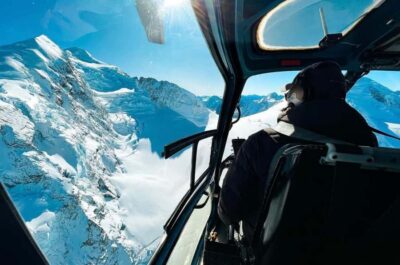
Franz Josef Glacier: Helicopter Flight & Alpine Landing
Read our review →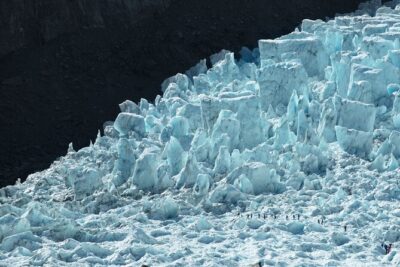
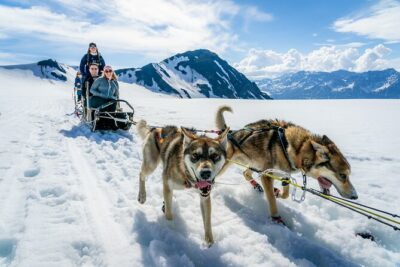
Alaska Helicopter and Glacier Dogsled Tour – ANCHORAGE AREA
Read our review →
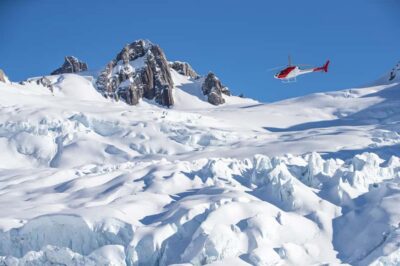
Franz Josef & Fox Glaciers Helicopter Flight & Snow Landing
Read our review →Browse the lists this tour appears in