
REVIEW · EVEREST & HIMALAYA HELICOPTER TOURS
Everest base camp trek & Heli return
Everest in one week is possible, but it is not easy. This seven-day trip takes you from Kathmandu to Lukla, on foot through Phakding, Namche Bazaar, Tengboche, Dingboche, Lobuche, and Gorakshep, then back by shared helicopter. I like the efficient one-way design and the chance to see Everest Base Camp and Kala Patthar without retracing the entire trail.
I also like that the price includes a licensed English-speaking guide, tea house lodging, meals, permits, the Lukla flight, airport transfers, and the helicopter ride from Gorakshep. The main caution is the pace: reaching 5,364 meters in only six walking days demands good fitness, steady effort, and some flexibility when mountain weather affects flights.
Key points to know before booking
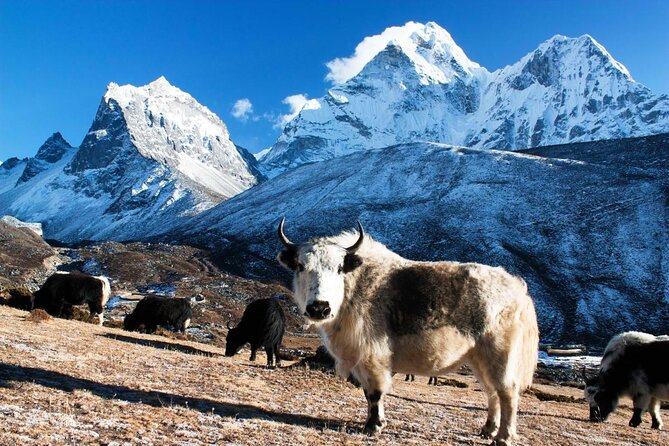
- The route reaches Everest Base Camp at 5,364 meters, with a separate early morning climb to Kala Patthar at 5,545 meters.
- The helicopter return saves several days of walking, making this a fast one-way version of the classic Everest route.
- The itinerary includes a shared helicopter, so the return flight is not necessarily private.
- The most demanding days come late, with six hours to Lobuche, seven hours to Base Camp and Gorakshep, and a high-altitude climb to Kala Patthar.
- Padam is one named guide associated with the trek, while Kesh handles communication and trip arrangements for Himalayan Mentor.
- The $3,195 price includes major trip costs, but not Kathmandu hotels, insurance, emergency evacuation, personal gear, Wi-Fi, showers, drinks, or charging.
What this seven-day Everest trip is really like
This is a compact Himalayan trek built around one clever idea: walk uphill through the Khumbu Valley, then fly out from Gorakshep instead of spending several more days descending on foot.
That saves time, but it does not make the trek gentle. You still climb from Lukla at roughly 2,860 meters to Base Camp at 5,364 meters, with a night at Gorakshep and an early morning ascent to Kala Patthar at 5,545 meters. You need to be comfortable walking for four to seven hours a day and handling steep, high-altitude trails.
I see this trip as a good fit for someone with limited time who wants the main Everest experience rather than a long, traditional round trip. It is not the right choice if you want a slow schedule with extra acclimatization days or plenty of spare time for weather problems.
The group can include up to 15 people. That is large enough to provide company but small enough for a guide to keep track of the group more easily than on a large coach-style tour.
More Himalaya Helicopter Tours in Kathmandu:
- Everest Base Camp Helicopter Tour landing at Everest View Hotel
★ 5.0 · 668 reviews - Everest Base Camp Helicopter Tour landing at Hotel Everest View
★ 5.0 · 218 reviews - Everest Base Camp Trek with Helicopter Return from Gorakshep to Lukla
★ 5.0 · 161 reviews
Early start at Kathmandu and the flight to Lukla
Your day begins at 5:15 a.m. at the domestic terminal parking lot at Tribhuvan International Airport in Kathmandu. The early start matters because the Lukla flight is the gateway to the trek, and the schedule leaves little room for delays on the walking days that follow.
After flying to Lukla, you begin walking toward Phakding. The first day includes about four hours on foot and ends at an elevation of roughly 2,600 meters.
Phakding is not a major sightseeing stop. Its value is practical. It gives you a first short walking day after the flight and places you on the route toward Namche Bazaar. You spend the night in a tea house lodge, where the basic setting is part of the experience.
The Lukla flight can be affected by weather. One of the useful points from this company’s past service is that Kesh stayed in contact during weather delays and helped arrange changes when needed. You should still arrive prepared for uncertainty. A tight seven-day plan has little spare space if flights move.
Phakding to Namche Bazaar, four to five hours
Day two takes you from Phakding to Namche Bazaar at about 3,500 meters. The walk is listed at four to five hours, followed by time to explore Namche in the late afternoon.
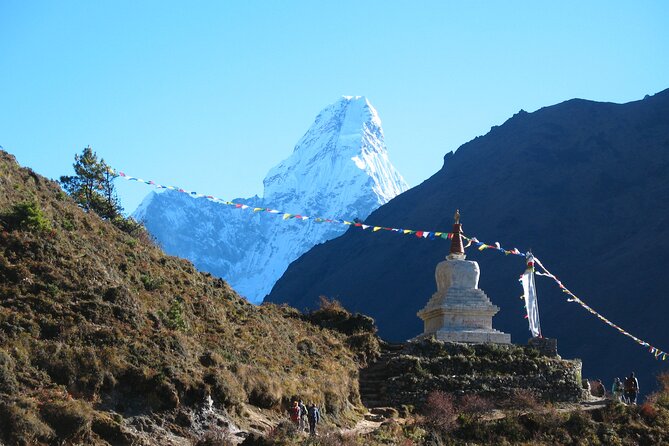
Namche is the first major settlement on the route and one of the most memorable stops. The trail begins to feel more like a serious mountain journey here, with a larger village setting, mountain views, and a clear change in altitude.
The short schedule means your body has to adjust while the route keeps climbing. That is the tradeoff of this itinerary. You get to Namche quickly, but you do not have a separate acclimatization day there. If you have any concern about altitude, discuss it with the guide early rather than trying to push through quietly.
A guide can make a real difference on a day like this. Padam is specifically praised for his years of experience in the mountains, good English, calm manner, and willingness to answer questions. Those qualities matter more than a polished speech when you are tired, cold, or unsure how your body is reacting.
Namche to Tengboche through rhododendron country
The third day leads from Namche to Tengboche, at about 3,870 meters. Expect roughly four to five hours of walking through rhododendron forest, past Mani walls and Chortens, with wide Himalayan views along the way.
This is one of the most rewarding sections for variety. You are not simply walking on a bare high-altitude trail. The route passes through forest and traditional Buddhist features, then opens toward mountain views.
Tengboche gives the trek a strong cultural sense. The chortens and Mani walls are not decorative extras placed for visitors. They are part of the local religious setting, and your guide can help explain what you are seeing if you ask.
The altitude continues to rise, so the day can feel harder than its distance suggests. Take the schedule seriously. Four or five hours at nearly 4,000 meters can tax you more than a longer walk at home.
More Heli-Hike Trips in Kathmandu:
- Everest Base Camp Trek with Helicopter Return to Lukla – 10 Days
★ 5.0 · 34 reviews - Everest Base Camp Trek with Helicopter Return -11 Days
★ 5.0 · 12 reviews - Helicopter Return Everest Base Camp Trek, KTM-LUKLA & Gorakshep-KTM by Heli
★ 5.0 · 9 reviews - Everest Base Camp Trek with Helicopter Return – 10 Days
★ 5.0 · 9 reviews
Tengboche to Dingboche, six hours of steady climbing
Day four starts with a descent through rhododendron forest to Deboche. You then cross a bridge over the Imja Khola before climbing toward Pangboche and Somare, finally reaching Dingboche.
The route takes about six hours. The bridge and river add a memorable change of scene, but the key point is the steady uphill work after the crossing. This is no gentle stroll through a village valley.
Dingboche is an important overnight stop because you are now moving firmly into high-altitude terrain. The itinerary does not provide a spare acclimatization day here, so the pace remains demanding.
You will want to keep your daypack manageable and your walking rhythm steady. Personal trekking gear is not included, so you must arrive with the equipment you need. The company does not cover battery charging, Wi-Fi, hot water showers, mineral water, or drinks, so extra cash is useful for these personal costs.
Dingboche to Lobuche and the changing scenery
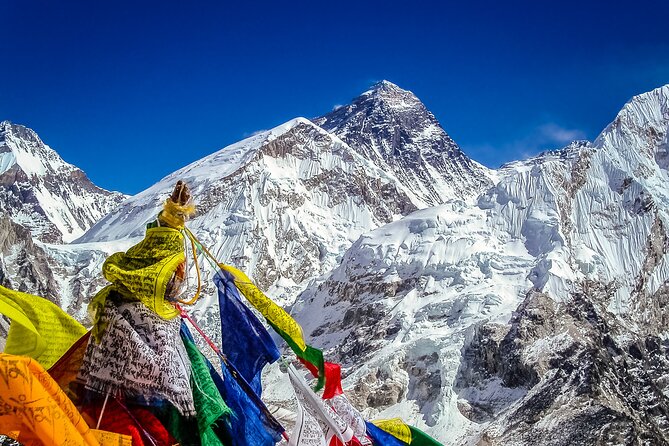
The fifth day takes you to Lobuche in about six hours. Along the route, you can expect views of Ama Dablam, Lhotse, Phortse Peak, and Cholatse. The trail passes through Dughla before continuing to Lobuche.
This is where the trek feels more exposed and serious. The forested sections are largely behind you, and the route moves into a high, open setting. The mountains become the main feature, but the thin air becomes harder to ignore.
The itinerary describes the views as a major part of the day, and that is fair. Ama Dablam is especially notable for its distinctive shape, while Lhotse gives the route a direct connection to the Everest massif.
Lobuche is a functional overnight stop before the major Base Camp day. Do not expect a relaxed afternoon packed with activities. Use the time to eat, rest, check your clothing and keep your gear ready for an early start.
Lobuche to Everest Base Camp through Gorakshep
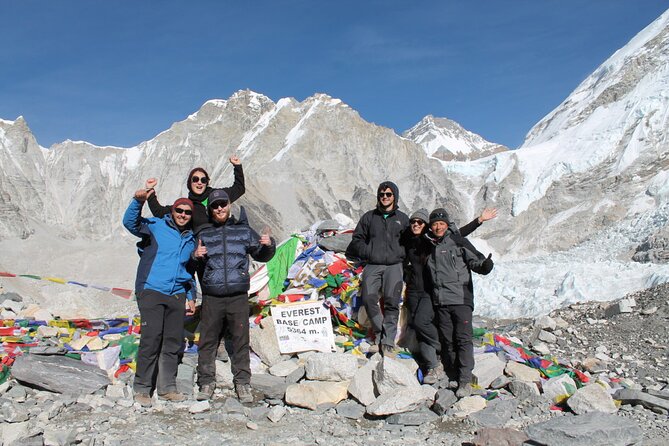
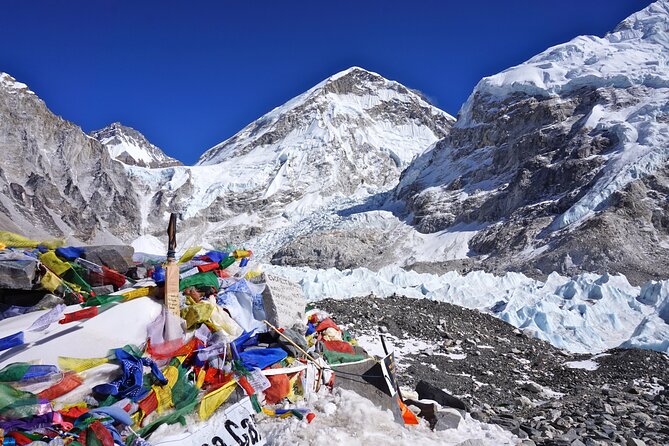
Day six is the main challenge. You walk from Lobuche to Gorakshep, have lunch there, then continue to Everest Base Camp at 5,364 meters before returning to Gorakshep for the night.
The full day is listed at about seven hours. That number includes the approach to Gorakshep, the Base Camp walk, time at Base Camp, and the return to the lodge.
Gorakshep is the practical base for this section. The route from there to Base Camp is not a quick photo stop. You walk at high altitude over rough ground, and the outward and return sections both count.
Reaching Everest Base Camp is the emotional high point for many people on this route. You are standing at the starting area for climbers attempting the summit, though the actual summit of Everest is not reached on this tour. That distinction is important. This is a Base Camp trek, not a mountaineering expedition.
The altitude can make the day feel slow. Follow the guide’s pace rather than racing ahead, and tell the guide if you feel unwell. The trip is designed for people with moderate physical fitness, but fitness alone does not remove the effects of altitude.
Kala Patthar at 5,545 meters, then the helicopter home
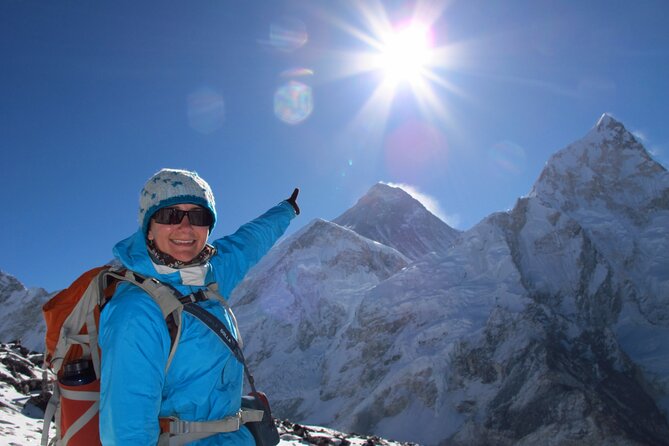
Day seven begins early with the climb to Kala Patthar, the highest point on the walking route at 5,545 meters. The walking time is listed as about two hours before returning to Gorakshep for breakfast.
Kala Patthar is prized for its views of Everest and the surrounding Himalayas. It is also the final major walking objective, which makes the early start worthwhile for people who want a high viewpoint rather than only the Base Camp experience.
After breakfast, you board a shared helicopter from Gorakshep to Kathmandu. This is the feature that makes the trip possible in seven days. Instead of walking back through Lobuche, Dingboche, Tengboche, Namche, and Lukla, you leave the mountains by air.
The helicopter is shared, not described as a private charter. That keeps the plan more practical, but it also means the exact flight arrangements can depend on availability and conditions.
Weather remains a real factor. A past trip required flexibility because of delays, and Kesh stayed available to help with changes. You should view that kind of communication as useful support, not as a guarantee that every flight will operate on the planned day.
What the $3,195 price includes
At $3,195 per person, this is an expensive trek, but the price covers several costly pieces of a Himalayan trip.
Included are airport pickup and drop-off for the trek, tea house lodging, trekking permits and entrance fees, a licensed English-speaking guide, the Kathmandu to Lukla flight, and the shared helicopter from Gorakshep to Kathmandu.
The package also includes six breakfasts, six lunches, and six dinners. That removes much of the daily planning and gives you a clear base for the trip budget.
The helicopter return is the main value question. You are paying not only for transport but also for the time saved by avoiding the entire descent. If your holiday schedule is tight, that may justify the higher price. If you have plenty of time and want to reduce the cost, a longer walking return could be worth comparing.
You still need to budget for a Kathmandu hotel before and after the trek. Personal expenses are also extra, including drinks, mineral water, hot showers, Wi-Fi, battery charging, and other lodge costs.
Travel insurance and emergency evacuation are not included. That is a serious point, not a minor footnote. Arrange suitable insurance before departure and check that it covers high-altitude trekking and emergency evacuation.
Lodges, meals, guides, and group size
Accommodation is in tea house lodges. This means a basic mountain lodging experience rather than a city hotel. The attraction is that you sleep along the walking route and remain close to the local communities, but you should not expect hotel-style extras.
The guide is a licensed English-speaking government guide. Padam receives especially warm praise for his calm help before the Lukla flight, his mountain experience, and his friendly manner. Those details suggest the guiding service is one of the strongest parts of the trip.
Kesh is the main contact associated with communication and arrangements. He is praised for responsive WhatsApp communication, simple payment handling, and practical help, including finding boots for a group member who arrived without them. You should still bring your own properly fitted boots. Last-minute rescue help is useful, but it is not a packing strategy.
A maximum of 15 people keeps the trip from becoming a large group operation. Ask how many people are actually booked for your date, since the maximum is not necessarily the usual group size.
Who should book this trek?
I would consider this trip if you have about a week for the Everest region, want Base Camp and Kala Patthar, and prefer to spend your limited time walking uphill rather than retracing the route on the descent.
It suits people with moderate to strong fitness, a willingness to walk four to seven hours daily, and a practical attitude toward basic tea house lodging. You should be ready for early mornings, changing weather, limited personal comforts, and a fast rise in altitude.
I would hesitate if you are new to long mountain walks, want a leisurely schedule, or cannot accept the possibility of flight changes. The seven-day format is efficient, but efficiency here means less recovery time.
The company’s six published ratings are listed at five out of five, with particular praise for Padam’s support and Kesh’s communication. That is encouraging, but no guide can control high-altitude weather or remove the physical demands of the route.
Final verdict: a fast and focused Everest choice
I like the design of this trip. You walk the classic approach through Phakding, Namche, Tengboche, Dingboche, Lobuche, and Gorakshep, reach Base Camp, climb Kala Patthar, and avoid the long return trek by helicopter.
The main strengths are the experienced personal support, the included Lukla flight and helicopter return, and the chance to complete the route in about seven days. The main weaknesses are the hard pace, lack of a dedicated acclimatization day, extra personal costs, and exposure to weather delays.
Book it if time matters and you are physically ready for a demanding high-altitude route. Choose a longer itinerary if you want more breathing room, more rest, or a gentler adjustment to the altitude.
FAQ
How long does the Everest Base Camp trek and helicopter return take?
The experience lasts approximately seven days. The walking route finishes with the Kala Patthar climb, followed by a shared helicopter flight from Gorakshep to Kathmandu.
What altitude does the trek reach?
Everest Base Camp is at 5,364 meters. Kala Patthar reaches 5,545 meters and is the highest point listed on the walking route.
Is the helicopter private?
No. The return flight from Gorakshep to Kathmandu is described as a shared helicopter flight.
What meals are included?
Six breakfasts, six lunches, and six dinners are included. Drinks, mineral water, and other personal food and beverage expenses are not included.
Is accommodation included?
Yes. Overnight accommodation in tea house lodges is included. Hotels in Kathmandu before and after the trek are not included.
What should I arrange separately?
You need to arrange travel insurance, including suitable emergency evacuation cover, and bring your personal trekking gear. Battery charging, Wi-Fi, hot water showers, beverages, mineral water, and Kathmandu hotels are also excluded.
Just added around Kathmandu
- Day Tour to Everest Base Camp By Helicopter★ 5.0 · 16 reviews
- Mount Everest Helicopter Tour with Landings★ 5.0 · 2 reviews
- Mount Everest Scenic Helicopter Tour★ 5.0 · 6 reviews
- Guaranteed Landing at Everest Base Camp Kalapathar by Helicopter★ 5.0 · 38 reviews
- Kathmandu To Lukla By Helicopter Flight★ 5.0 · 6 reviews
- Everest Base Camp Helicopter Tour with Hotel Everest View Landing★ 5.0 · 52 reviews
- Langtang Helicopter Tour★ 5.0 · 6 reviews
- Himalayan Gosaikunda Helicopter Tour from Kathmandu★ 4.5 · 3 reviews
Everest & Himalaya Helicopter Tours, compared.
Everest Base Camp Helicopter Tour landing at Hotel Everest View
Read our review →
Everest Base Camp Trek with Helicopter Return from Gorakshep to Lukla
Read our review →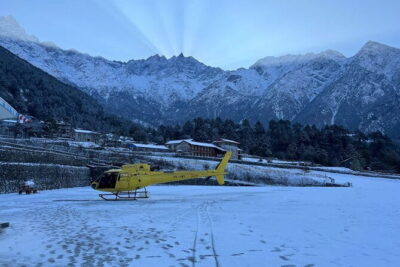
Everest Base Camp helicopter tour with landing
Read our review →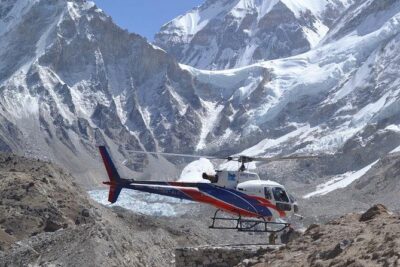
Everest Base Camp Helicopter Tour with Hotel Everest View Landing
Read our review →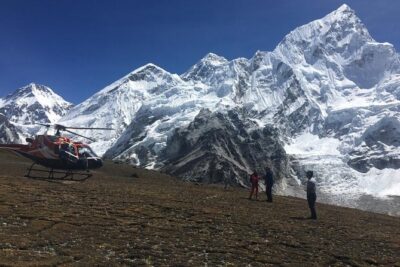
Guaranteed Landing at Everest Base Camp Kalapathar by Helicopter
Read our review →
Everest Base Camp Helicopter Tour landing at Everest View Hotel.
Read our review →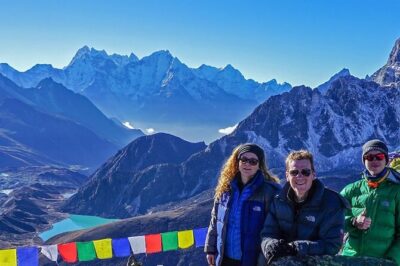
Everest Base Camp Trek with Helicopter Return to Lukla – 10 Days
Read our review →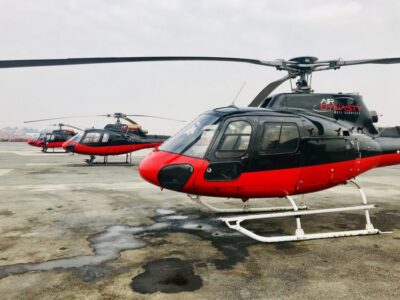
Browse the lists this tour appears in