
REVIEW · EVEREST & HIMALAYA HELICOPTER TOURS
Everest Base Camp Trek | Deluxe Lodges | Both Way Helicopter Ride
Everest comes with a tight schedule. This 10-day Everest Base Camp trek packs the big Himalayan sights into a shorter trip, using helicopters to avoid the long road and flight connections at both ends. I like the scenic Kathmandu to Lukla flight and the practical package, which covers permits, meals, guides, porters, gear, and airport transfers. The main concern is the pace: reaching nearly 5,500 meters in ten days demands strong fitness and careful attention to altitude.
I also like the two acclimatization days at Namche Bazaar and Dingboche, plus the sunrise walk to Kala Patthar. Guides such as Tika, Pramod, Rabin, and Prakash have been praised for their care, flexibility, and safety focus. Still, the word deluxe needs a little context. You sleep in the best available twin-share lodges along the trail, not luxury hotels, and the high-altitude section remains physically hard.
Key points to know before booking
- Shared helicopters save time: Fly from Kathmandu to Lukla, then return by helicopter from Gorakshep toward Lukla and Kathmandu.
- The trek reaches Everest Base Camp: You walk through Namche, Tengboche, Pangboche, Dingboche, Lobuche, and Gorakshep before reaching Base Camp.
- Two acclimatization days are built in: One is at Namche Bazaar and the other is at Dingboche.
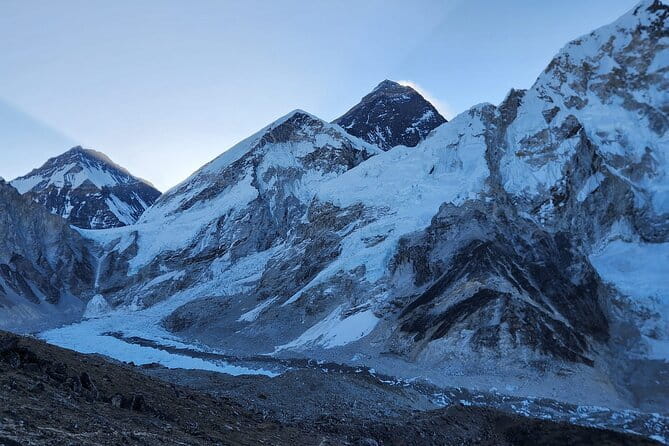
- Kala Patthar adds the classic view: An early morning climb gives you sunrise over Everest and the surrounding peaks.
- A lot is included for $3,332: Lodging, meals on the trail, permits, guides, porters, warm clothing, sleeping bags, and helicopter transport are covered.
- Fitness matters more than speed: The schedule is short, and altitude can affect even fit hikers.
What the $3,332 price really covers
At $3,332 per person, this is not a budget Everest Base Camp trip. The price reflects the use of shared helicopters, a private group, staff support, trail permits, and a shorter schedule than a standard walking itinerary.
I see good value in the package if you want to reduce time spent getting to and from the Khumbu region. The helicopter from Kathmandu to Lukla removes the usual airport uncertainty and gives you a scenic 45-minute flight over the Himalayan region. The return arrangement also cuts out the long walk back from Base Camp.
The package includes two nights in a three-star Kathmandu hotel with breakfast, one before and one after the trek. Along the trail, you stay in twin-share lodges described as the best available. That usually means a simple mountain lodge rather than a polished hotel, so you should think of deluxe as the stronger lodge option available at each stop, not a luxury standard.
The price also covers breakfast for all ten days, eight lunches, and eight dinners. Food and lodging in Kathmandu are only partly included, so you pay separately for Kathmandu lunches and dinners. Drinks, snacks, international flights, the Nepal entry visa, and travel insurance are also extra.
A particularly important extra is insurance that covers rescue and evacuation up to 5,500 meters. Do not treat ordinary travel insurance as enough. The trip reaches extreme altitude, and the package does not include your personal insurance.
More Himalaya Helicopter Tours in Kathmandu:
- Everest Base Camp Helicopter Tour landing at Everest View Hotel
★ 5.0 · 668 reviews - Everest Base Camp Helicopter Tour landing at Hotel Everest View
★ 5.0 · 218 reviews - Everest Base Camp Trek with Helicopter Return from Gorakshep to Lukla
★ 5.0 · 161 reviews
Day 1 in Thamel, a useful soft landing
Your airport pickup takes you to the hotel in Kathmandu by car or van. The overnight stay in Thamel gives you time to rest after an international flight and meet the trekking team before the early start.
This first day is simple, but it matters. The trek begins early, and you will be glad not to combine airport arrival, gear sorting, and a mountain flight on the same day. The company also provides a duffel bag, T-shirt, trail map, down jacket, and sleeping bag for the trip.
The luggage allowance is 10 kilograms for your main bag and 5 kilograms for a handbag. Pack carefully. Porters carry the main bags, but you still need a daypack with essentials for each walking day.
Day 2, the helicopter to Lukla and the walk to Phakding
The morning helicopter flight to Tenzing-Hillary Airport in Lukla is one of the trip’s memorable opening scenes. The flight lasts about 45 minutes and offers views toward Everest and Kanchenjunga before landing in the mountain town of Lukla.
From Lukla, you begin walking toward Phakding. This first section follows the Dudh Koshi River and is intended to be gentle enough for your body to begin adjusting. You pass through Sherpa villages and forested sections, with time to settle into the rhythm of walking and lodge life.
The helicopter saves a major amount of time, but it does not make the trek easy. You still need to walk from Lukla onward, and the schedule moves into higher country quickly. Keep your first day controlled. A strong start is useful, but racing early can make later altitude days harder.
Day 3, suspension bridges and the first arrival in Namche
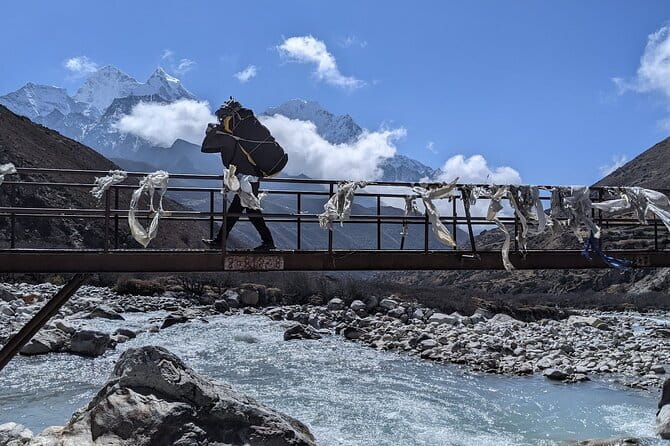
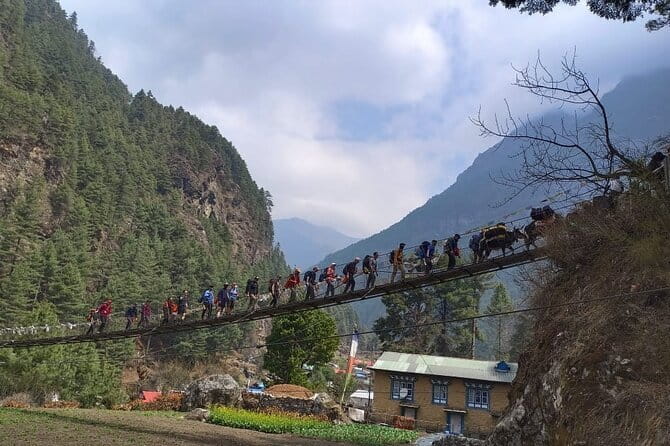
The trail continues through pine forest beside the Dudh Koshi River. You cross suspension bridges and pass Benkar and Monjo before reaching the confluence of the Dudh Koshi and Bhote Koshi rivers.
The route then climbs toward Namche Bazaar. The final ascent is a serious change from the lower trail, but it rewards you with the first glimpse of Everest above the Lhotse and Nuptse range. Namche sits at about 3,440 meters and feels like a major mountain hub after the quieter villages below.
I would treat this day as a test of pacing. The trail may not look technically difficult, yet the altitude begins to make every uphill section slower. Drink regularly, keep your pack light, and listen to your guide if you need a slower pace.
More Heli-Hike Trips in Kathmandu:
- Everest Base Camp Trek with Helicopter Return to Lukla – 10 Days
★ 5.0 · 34 reviews - Everest Base Camp Trek with Helicopter Return -11 Days
★ 5.0 · 12 reviews - Helicopter Return Everest Base Camp Trek, KTM-LUKLA & Gorakshep-KTM by Heli
★ 5.0 · 9 reviews - Everest Base Camp Trek with Helicopter Return – 10 Days
★ 5.0 · 9 reviews
Day 4, acclimatizing above Namche Bazaar
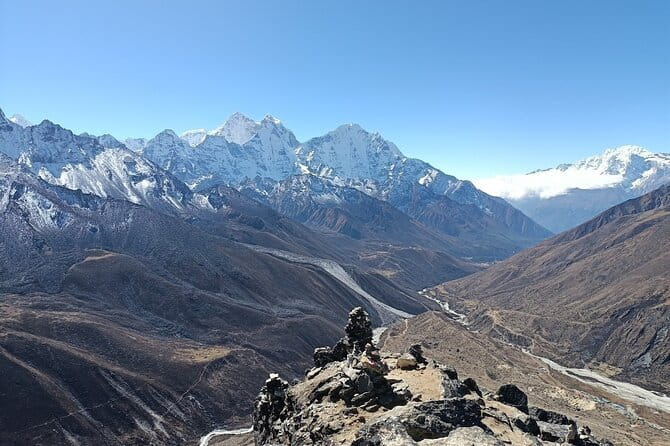
The first acclimatization day includes a hike toward Syangboche and the Hotel Everest View, at about 3,880 meters. From this area, you can look across to Everest, Ama Dablam, Lhotse, and nearby peaks while giving your body time to adjust.
The visit to Hotel Everest View is listed as optional in practical terms because admission is not included. You may enjoy a coffee there, but budget separately if you want to use the hotel. The real value of the stop is the view and the chance to hike higher before sleeping back in Namche.
Afterward, you have several hours to explore Namche’s market, restaurants, massage centers, and spa facilities. This is one of the more comfortable stops on the route, but do not mistake a relaxed afternoon for a day off. The walk above Namche is part of the altitude plan.
Day 5, Tengboche and one of the route’s finest settings
From Namche, the trail follows the Dudh Koshi for a time before crossing another suspension bridge into the Imja Khola Valley. The walk leads to Tengboche Gompa, one of the major cultural stops on the route.
Tengboche combines mountain views with Sherpa Buddhist tradition. The setting is especially striking, with Ama Dablam and other peaks forming a dramatic backdrop. The monastery gives this day more meaning than a simple hike from one lodge to the next.
The listed walking time is about five hours, but mountain timing is never exact. Stops, weather, trail conditions, and your pace all matter. Keep some energy in reserve for the next morning rather than treating Tengboche as the finish line.
Day 6, Pangboche and the higher Khumbu valley
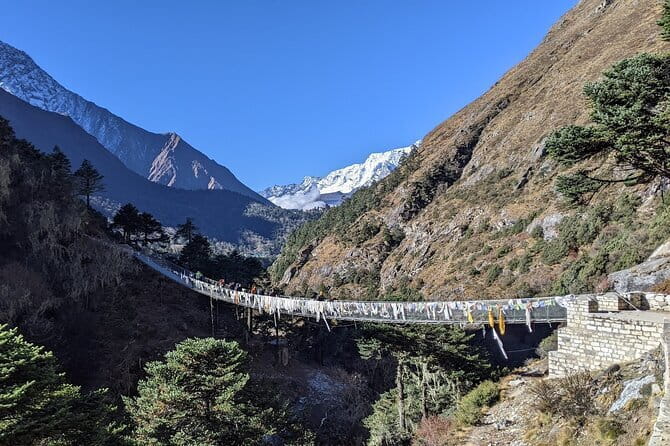
The route continues toward Pangboche, passing through increasingly high mountain country. You get views of Ama Dablam and Lhotse as the trail moves deeper into the Khumbu region.
Pangboche is associated with a Buddhist monastery and offers a quieter setting than Namche. The day is described as roughly five hours of walking, making it a useful bridge between the lower villages and Dingboche.
You are now far enough above sea level that ordinary effort can feel much harder. This is where a good guide makes a real difference. The company assigns a licensed trekking guide and one porter for every two people, with staff insurance and equipment included.
Day 7, the second acclimatization day at Dingboche
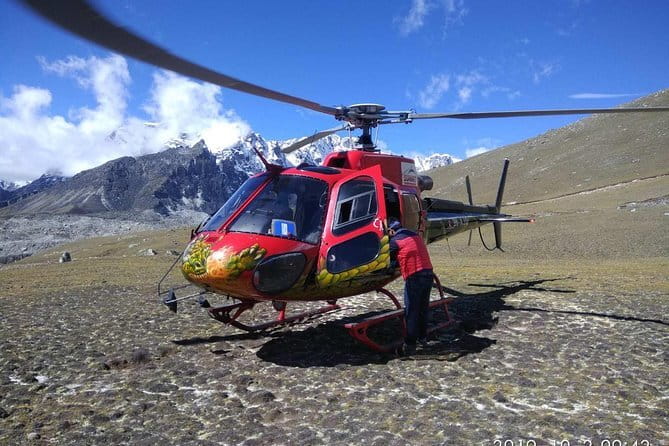
Dingboche provides the second acclimatization stop. The plan follows the classic approach of climbing higher during the day and sleeping at a lower altitude afterward.
This day includes a hike toward the top of a nearby ridge or viewpoint, though the supplied schedule does not give a precise summit name or elevation. The purpose is clear: gain height gradually, return to Dingboche, and prepare for the harder section ahead.
Acclimatization days are not wasted days. They are one of the strongest features of this short itinerary. Without them, the fast schedule would be far less sensible. You should still be honest about symptoms and tell your guide if you develop a headache, unusual fatigue, nausea, or breathing trouble.
Day 8, Lobuche and the memorials at Thukla
The walk to Lobuche is described as relatively light in distance but significant in altitude gain. The route follows steep slopes toward the broad valley of Dughla, then continues toward the memorial area above Thukla.
The memorials honor climbers and Sherpa support staff who died on Everest and other peaks. This section gives the trek a quiet, serious pause. The mountains here are not just scenery. They also reflect the danger and effort tied to high-altitude climbing.
The stated timing is about 14 hours in the schedule, which appears unusually long for a normal walking day and may reflect an itinerary formatting issue. You should confirm the expected daily walking time directly with the operator before booking, especially if you are concerned about stamina.
Day 9, Gorakshep and Everest Base Camp
From Lobuche, you walk across glacier terrain toward Gorakshep. The trek to Gorakshep takes about four hours according to the schedule, and this is the last settlement before Base Camp.
After a break, you continue toward Everest Base Camp. The trail is rocky and demanding, and the thin air makes the approach slower than the distance suggests. Base Camp is the emotional high point of the trek, even though the summit of Everest is not directly visible from the camp itself in the classic way many people expect.
You then return to Gorakshep for the night. The package includes a shared helicopter from the Gorakshep area toward Lukla, but the precise timing and flight routing should be confirmed before departure. Weather can affect mountain helicopter operations, so keep your plans flexible.
Day 10, Kala Patthar at sunrise and the helicopter return
The final morning begins before sunrise with a climb toward Kala Patthar. This viewpoint is famous for broad views of Everest, Pumori, Nuptse, Lhotse, and the surrounding peaks, especially when the first light reaches the summit faces.
The climb is short on paper, around five hours for the day’s activity, but it is tough at altitude. Your reward is one of the best viewing points on the route and a fitting final challenge after Base Camp.
After Kala Patthar, the return uses helicopter transport. The included arrangements mention a shared flight from Everest Base Camp or Gorakshep to Lukla, along with helicopter transport from Lukla to Kathmandu. Confirm the exact flight sequence with Life Himalaya Trekking, since the return depends on weather and aircraft operations.
Guides, porters, and the human side of the trek
The company provides a government-licensed guide and porters, with one porter assigned for every two people. Staff costs, food, transportation, equipment, accidental insurance, and salary are included in the package.
That support matters most when the altitude becomes difficult. Several guides receive specific praise for being flexible and safety-focused. Tika is described as encouraging and attentive, while Pramod, Rabin, and Prakash are also singled out for professional care. One useful pattern in the feedback is the company’s willingness to adjust the pace and arrangements to suit individual needs.
The trip is private, so only your group participates. That gives you more say over the walking rhythm than a large mixed group would. It does not remove the need to respect the planned acclimatization schedule.
What to pack and what you still pay for
The supplied gear helps reduce your packing burden. You receive a warm down jacket and a sleeping bag rated to minus 20 degrees Celsius, both returned after the trek. A trekking bag, map, and first-aid support, including an oximeter, are also provided for the group and staff.
You still need suitable personal clothing, walking shoes, toiletries, water supplies, and any medication you normally use. The package does not include beverages or snacks, so plan for those costs along the trail.
Kathmandu meals outside breakfast are not included. International airfare, the Nepal visa, and high-altitude rescue insurance are also your responsibility. Read the inclusions carefully, because the headline price covers a great deal, but not every trip expense.
Who should book this 10-day Everest trek?
I would recommend this trip to a fit hiker who has limited vacation time and wants Base Camp without spending several extra days walking back to Lukla. The helicopters make the route more efficient, and the acclimatization days give the schedule a sensible structure.
It suits people who value logistics and staff support over independent trekking. You have airport transfers, permits, meals, accommodation, guides, porters, warm gear, and emergency coordination arranged in advance.
I would be cautious if you want a slow, spacious trek or dislike fixed schedules. Ten days is quick for this altitude. The private format helps, but it cannot change the steep climbs, cold nights, thin air, or weather risks.
The activity offers free cancellation up to 24 hours before the start time. Changes or cancellations inside that window are not accepted for a refund. Booking is commonly made about 34 days ahead, which is a useful planning guide for a popular high-altitude departure.
Should you book the Everest Base Camp trek?
Book it if your priority is reaching Everest Base Camp in a short, well-supported schedule and you accept the physical demands. The combination of helicopter transfers, two acclimatization days, licensed staff, and included equipment gives the price solid practical value.
Skip it if you want a leisurely walking holiday, private rooms throughout, or a fully flexible mountain plan. For the right person, this is an efficient way to see the Khumbu, meet the trail’s Sherpa communities, visit Tengboche, climb Kala Patthar, and return without retracing the entire route on foot.
FAQ
How long is the Everest Base Camp trek?
The planned duration is 10 days, including Kathmandu stays, helicopter flights, acclimatization days, the walk to Everest Base Camp, and the Kala Patthar climb.
Is helicopter transportation included?
Yes. Shared helicopter transport from Kathmandu to Lukla and from Lukla to Kathmandu is included. A shared helicopter flight from the Everest Base Camp or Gorakshep area to Lukla is also included.
What accommodation is provided?
You receive two nights in a three-star Kathmandu hotel with breakfast. During the trek, accommodation is twin-share in the best available lodges along the route.
Are meals included?
Breakfast is included for all ten days. The package also includes eight lunches and eight dinners. Lunch and dinner in Kathmandu, drinks, and snacks are not included.
What luggage allowance is provided?
The allowance is 10 kilograms for a large bag and 5 kilograms for a handbag. Porters carry the main luggage, with one porter assigned for every two people.
Do I need travel insurance?
Yes. Travel insurance covering rescue and evacuation up to 5,500 meters is not included but is required for this high-altitude trek.
Just added around Kathmandu
- Day Tour to Everest Base Camp By Helicopter★ 5.0 · 16 reviews
- Mount Everest Helicopter Tour with Landings★ 5.0 · 2 reviews
- Mount Everest Scenic Helicopter Tour★ 5.0 · 6 reviews
- Guaranteed Landing at Everest Base Camp Kalapathar by Helicopter★ 5.0 · 38 reviews
- Kathmandu To Lukla By Helicopter Flight★ 5.0 · 6 reviews
- Everest Base Camp Helicopter Tour with Hotel Everest View Landing★ 5.0 · 52 reviews
- Langtang Helicopter Tour★ 5.0 · 6 reviews
- Himalayan Gosaikunda Helicopter Tour from Kathmandu★ 4.5 · 3 reviews
Everest & Himalaya Helicopter Tours, compared.
Everest Base Camp Helicopter Tour landing at Hotel Everest View
Read our review →
Everest Base Camp Trek with Helicopter Return from Gorakshep to Lukla
Read our review →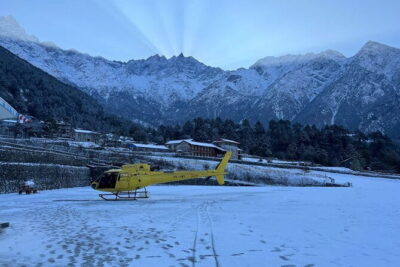
Everest Base Camp helicopter tour with landing
Read our review →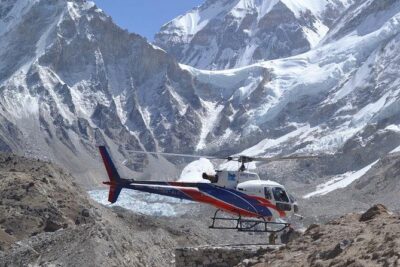
Everest Base Camp Helicopter Tour with Hotel Everest View Landing
Read our review →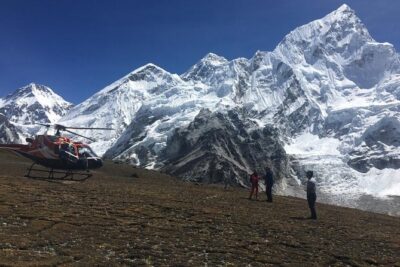
Guaranteed Landing at Everest Base Camp Kalapathar by Helicopter
Read our review →
Everest Base Camp Helicopter Tour landing at Everest View Hotel.
Read our review →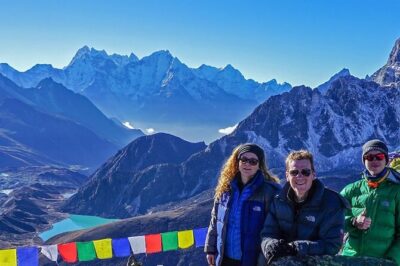
Everest Base Camp Trek with Helicopter Return to Lukla – 10 Days
Read our review →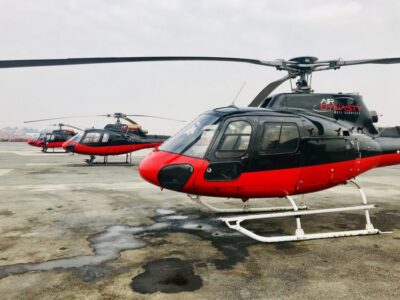
Browse the lists this tour appears in