
REVIEW · WATERFALL HELICOPTER TOURS
Kailua-Kona: Kohala, Volcanoes and Waterfall Helicopter Tour
Big Island views are made for the sky. This 90-minute flight from Kailua-Kona packs four volcanoes, remote valleys, waterfalls, reefs, and black-sand beaches into one sweeping route. I especially like the chance to see Mauna Loa and Mauna Kea together, and the choice between doors-on and doors-off flying gives you some control over the experience.
The route also reaches places that are difficult or impossible to visit by road, including Waimanu Valley, Pololū Valley, and the Kohala Coast waterfalls. The main drawback is the price: at $895 per person, this is a major splurge, and much of the tour consists of passing over sights rather than stopping at them.
The flight earns its strongest praise for smooth handling and clear commentary. One recent passenger singled out pilot Jeff for his calm manner and good conversation, while another praised a pilot who added plenty of Big Island history during a gentle ride. Still, the doors-off option does not guarantee a seat beside an open door, so you should book it for the airflow and photography opportunity, not a promised front-row opening.
The Big Island from a helicopter: key points
- Four major volcanoes in one flight: See Mauna Loa, Hualālai, Mauna Kea, and Kohala from above.
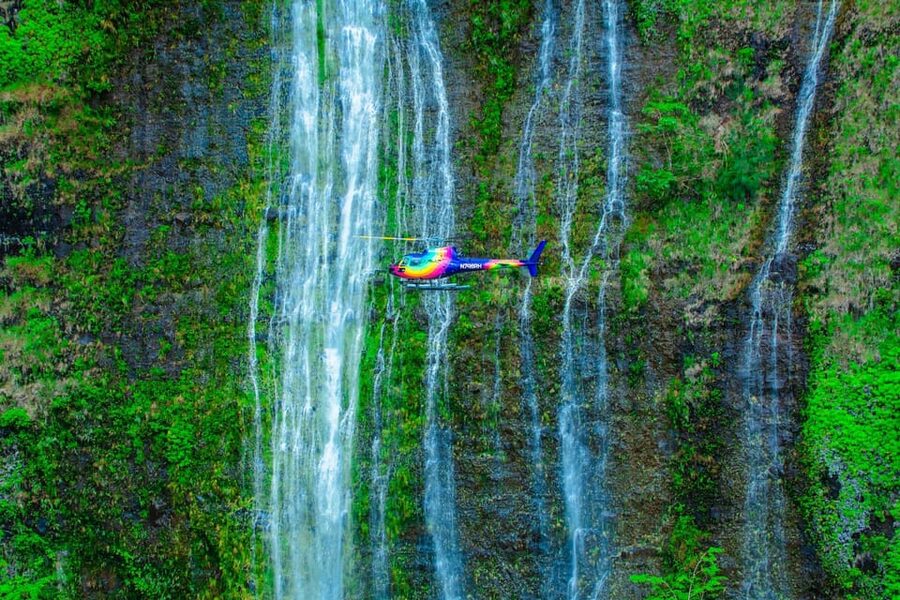
- Remote valleys and waterfalls: The route reaches Waimanu, Pololū, Honopue, and Waipio, areas that are hard to cover in one land-based outing.
- Doors-on or doors-off choice: The open-air option can make photos and views more dramatic, but seating beside the open door is not guaranteed.
- A wide coastal sweep: The flight links Kailua Bay, Kawaihae, Anaehoomalu Bay, Kiholo Bay, and Makalawena Beach.
- Useful, calm narration: Commentary covers natural features and Big Island history, with recent praise for pilots who made the ride smooth and informative.
- Plan for a full airport-style check-in: Arrive one hour early at the Big Island Jet Center for check-in and the required safety briefing.
Why this 90-minute flight covers so much ground
The Big Island is larger than it first appears. Its volcanoes, valleys, beaches, and waterfalls are spread across a huge area, and some of the most dramatic places are not connected by an easy sightseeing route.
That is the real value here. A helicopter lets you compare different sides of the island in a single outing. You move from clear coastal water to black volcanic rock, then from dry uplands to steep green valleys and falling water. By car, those sights would require several separate drives, and some valleys would still be visible only from a distant lookout.
The flight begins and ends with Rainbow Helicopters at the Big Island Jet Center. You should arrive one hour before departure, not just a few minutes early. The extra time covers check-in and the mandatory safety briefing, and it gives you a chance to settle before the aircraft loads.
Hotel pickup and drop-off are not included. You need to arrange your own way to the meeting point and park in the large lot south of the brown Big Island Jet Center building. Go through the front doors of that building.
More Waterfall Helicopter Tours in the USA
- Kauai Private Doors-Off Helicopter: Ultimate Waterfalls & Canyons
★ 5.0 · 1,510 reviews - Kauai Deluxe Waterfall Safari: Helicopter Tour
★ 5.0 · 900 reviews - Lihue: Deluxe Waterfall Safari Helicopter Tour
★ 4.8 · 422 reviews
Kailua Bay and the first view of Hawaii from above
The opening pass over Kailua Bay is a gentle introduction to the flight. From the air, the focus is the contrast between the clear water, reef patterns, shoreline, and built-up Kailua-Kona area.
This first section helps you understand the island’s coastal setting before the helicopter turns inland. The water can be especially appealing if you have spent your trip looking at the coast from beach level. From above, the shape of the bay and the color changes around the reef become easier to read.
The tradeoff is that this is a sightseeing pass, not a landing or water activity. You will not get time to swim, snorkel, or walk the beach as part of the tour. Think of Kailua Bay as the opening scene rather than a separate stop.
Mauna Loa, Hualālai, and the volcanic core
Mauna Loa is one of the biggest reasons to choose this flight. It is the world’s largest active volcano, and its broad form gives you a different idea of scale than a standard mountain peak. From ground level, you may see only one section of its immense mass. From the helicopter, the full shape becomes easier to grasp.
The route then brings you toward Ka‘ūpūlehu Crater and Hualālai. Ka‘ūpūlehu offers a close look at volcanic features, while Hualālai helps explain the rugged terrain around Kailua-Kona. These are not polished sightseeing sites with paths and signs. Their appeal comes from seeing raw volcanic forms from a safe distance and hearing the pilot explain what you are looking at.
The pilot’s narration matters here. A good guide can connect the dark rock, crater shapes, and broad slopes to the island’s volcanic story without turning the ride into a lecture. The available feedback points to that strength, with praise for calm pilots and commentary that included Big Island history.
One practical point: a helicopter flight does not guarantee equal views for everyone at every moment. The aircraft changes direction and altitude, and passengers on opposite sides may see different angles. The guide should help by pointing out major sights, but you should still keep your eyes moving.
Mauna Kea and the high country
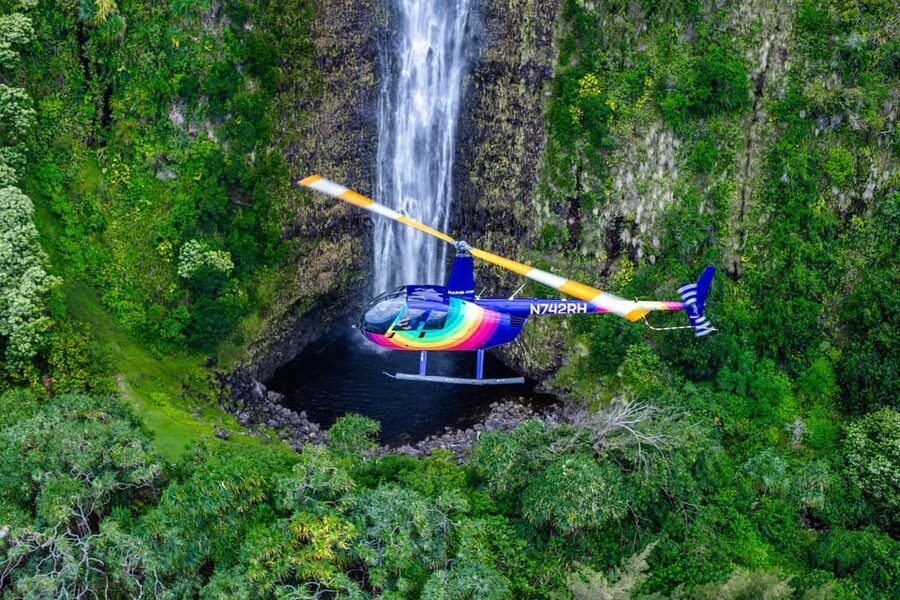
Mauna Kea appears in the distance at 13,796 feet. Its name means White Mountain, a reference to snow that can cover the summit at certain times of year. From the air, its height and isolated position help explain why the mountain dominates the center of the island.
Seeing Mauna Kea in the same flight as Mauna Loa gives you a useful sense of the Big Island’s scale. These are not two similar peaks crowded together. They are huge volcanic structures with different shapes and visual character.
The tour does not include a landing at the summit, and this matters if you are hoping for a high-altitude visit. You are seeing Mauna Kea as part of an aerial route, not taking a summit excursion. The benefit is comfort and efficiency. You avoid a long road trip while still getting a strong view of the mountain.
More Volcano Helicopter Tours in the USA:
- Volcano Adventure: Hilo Sightseeing w/ Optional Helicopter Tour
★ 4.5 · 412 reviews - Hana Rainforest and Haleakala Crater Helicopter Tour
★ 4.5 · 146 reviews - From Oahu: Big Island Volcano Adventure & Helicopter
★ 4.4 · 23 reviews - Hana Rainforest and Haleakala Crater 45-min Helicopter Tour
★ 5.0 · 18 reviews
Puʻu Waʻawaʻa and the Kohala side
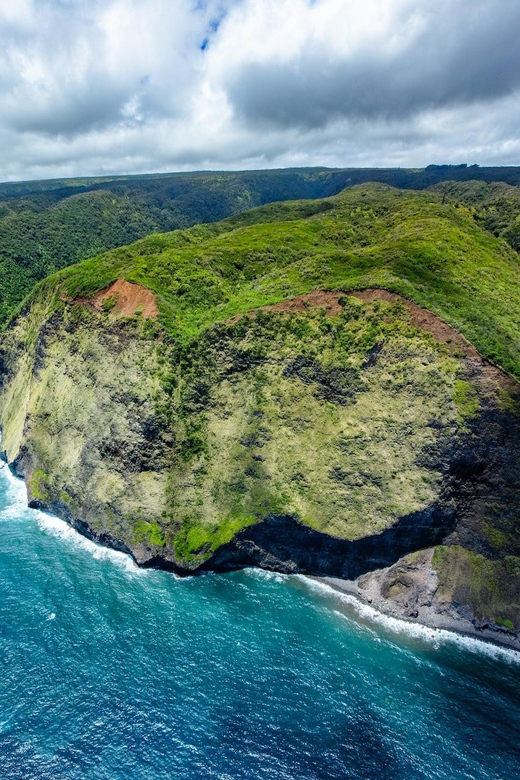
As the helicopter heads north, the dry volcanic ground gives way to the more wooded country around Puʻu Waʻawaʻa Forest Reserve. This section adds variety to the flight. You are no longer looking only at craters and lava. The reserve is home to native plants and animals found nowhere else in the world.
Kohala is the Big Island’s oldest major volcano, and its northern country feels very different from the newer volcanic terrain around Kailua-Kona. The route passes over the Kawaihae and Kohala Coasts, an area tied to the childhood of King Kamehameha.
That historical connection adds meaning to the view, especially when the pilot explains how the coast and uplands relate to the island’s past. You will not be visiting a museum or historical site from the helicopter, so the quality of the live commentary is important. If your interest is mainly cultural history, consider this a useful introduction rather than a full historical tour.
Waterfalls over Pololū, Waimanu, and Honopue
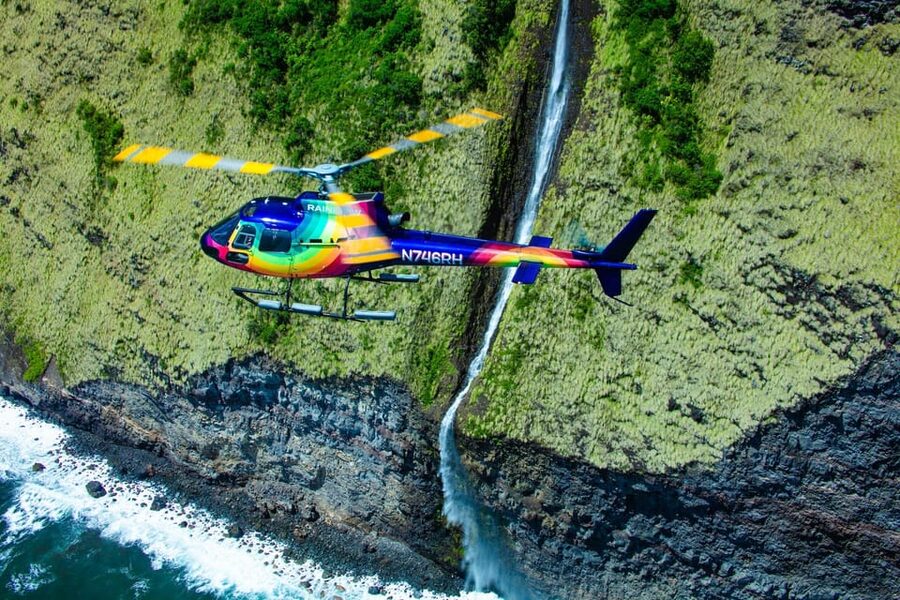
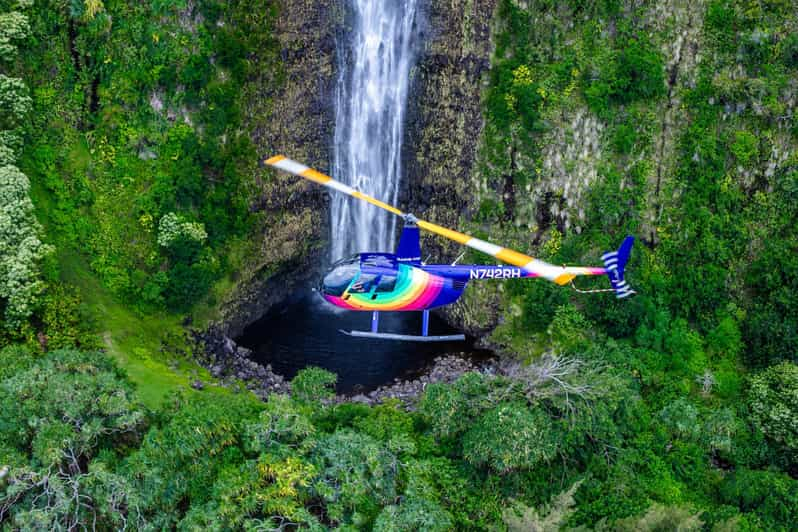
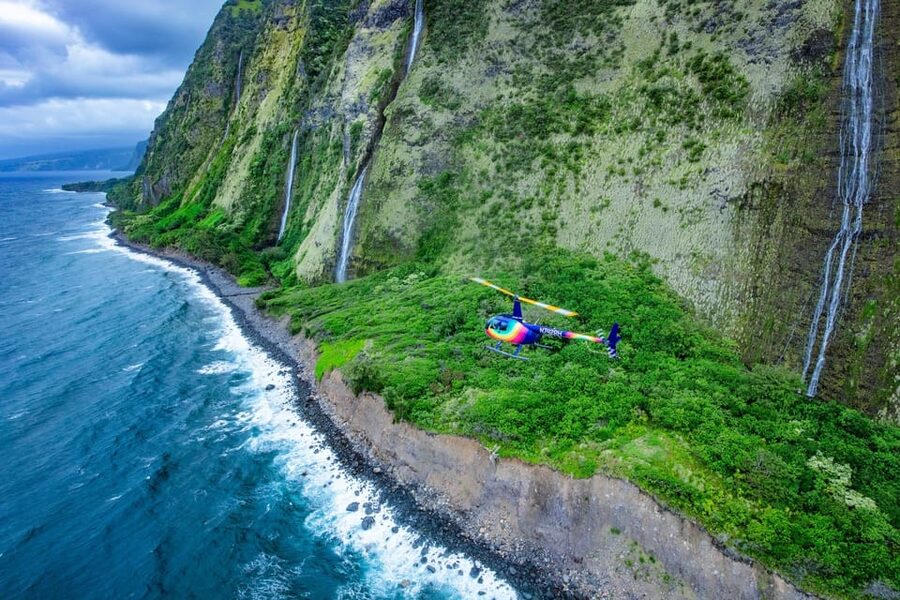
The most dramatic portion of the flight is likely the Kohala Coast’s remote valleys. The helicopter passes over Pololū Valley, Waimanu Valley, and Honopue Valley, with views of Laupāhoehoe Nui and Waiʻilikahi Falls.
These valleys are cut into the northern coast by steep ridges and heavy rainfall. From the air, you can see how quickly the terrain changes from upland forest to deep green folds dropping toward the ocean. The waterfalls may be seasonal in strength, and their appearance can depend on recent rain. That is worth keeping in mind if waterfalls are your main reason for booking.
The helicopter does not land in the valleys. You are looking down into them and along their walls, which gives you a broad view that a footpath cannot easily provide. The downside is obvious: the experience is brief. The aircraft circles or passes by, then continues along the route.
Waimanu Valley is particularly striking because the aerial view shows its remote setting and the way the valley meets the coast. Pololū offers another strong perspective, with steep green walls and a dramatic shoreline. These are among the places where the flight gives you access without requiring a long and demanding ground journey.
Waipio Valley and the black-sand coast
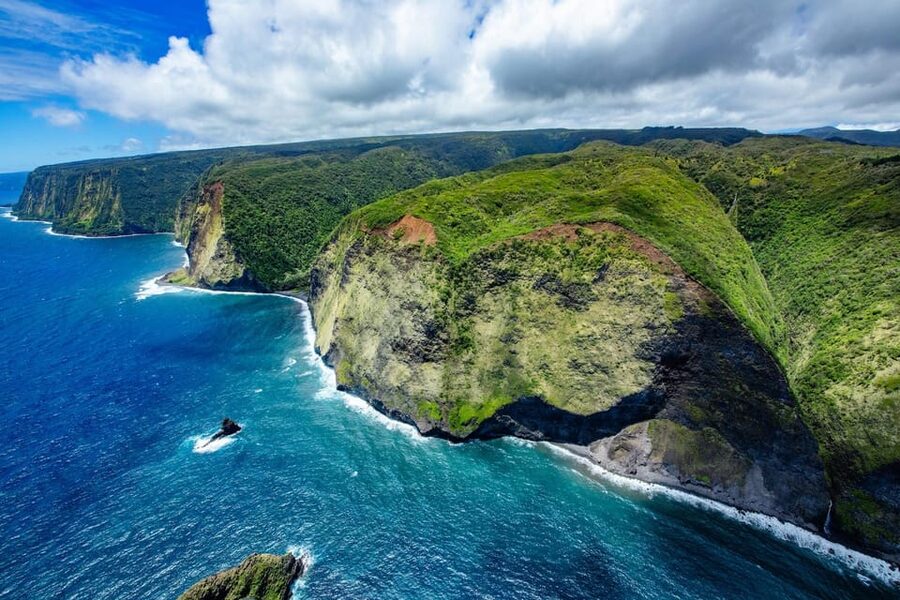
The route circles Waipio Valley, one of the best-known valleys on the island, then continues past its black-sand beach. The dark shore makes a sharp contrast with the surrounding greenery and blue Pacific.
From above, you can appreciate the full shape of the valley more easily than from a single roadside viewpoint. You also avoid making this tour dependent on a ground visit that may require separate planning. Still, the helicopter view is not a substitute for walking around the valley. There is no landing, beach time, or chance to explore on foot.
For many people, this section will be a highlight because it combines a famous destination with the unusual perspective of a flight. If you have already seen Waipio from land, the aerial angle adds something new. If you have not, the pilot’s commentary can help you place the valley within the island’s larger volcanic and coastal setting.
The return along bays and beaches
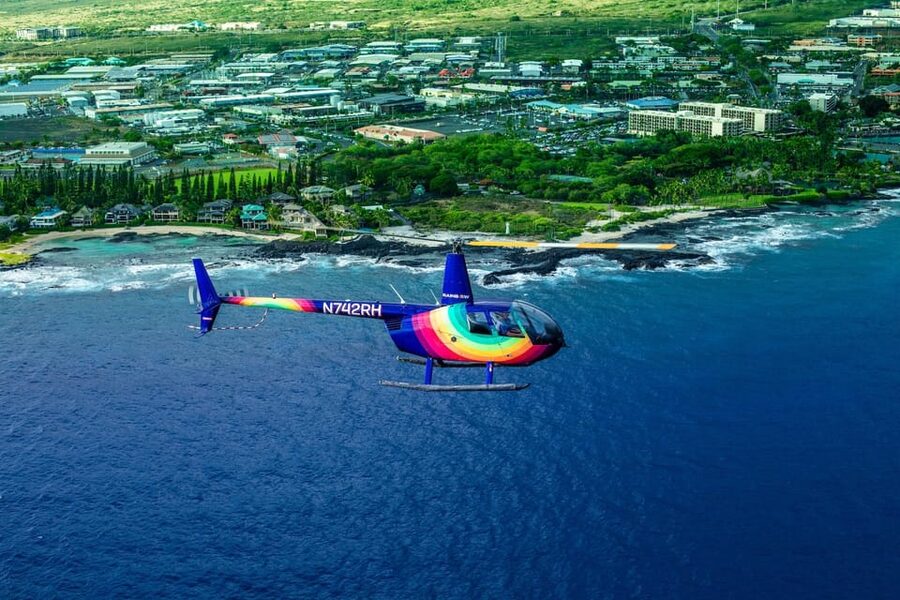
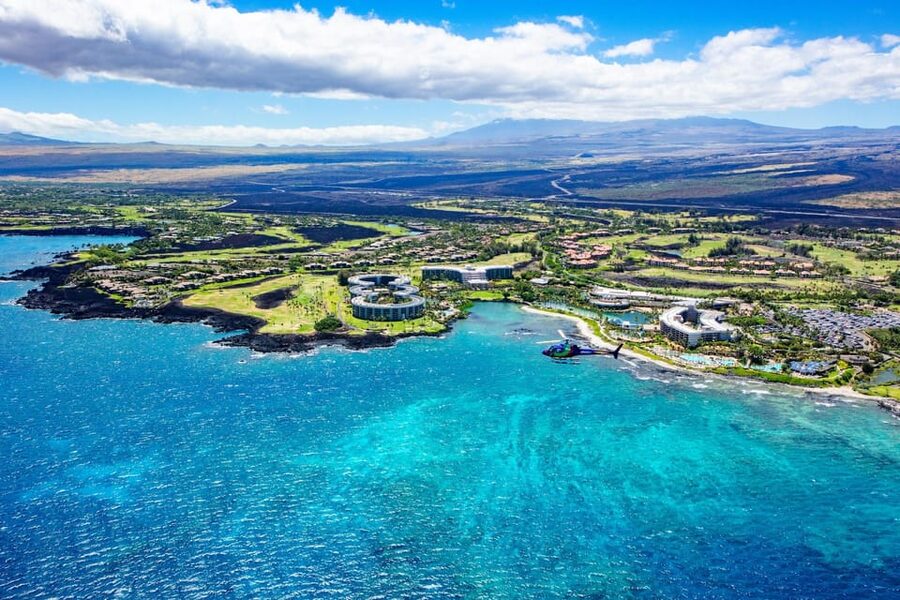
After the northern valleys, the helicopter traces the coast back toward Kailua-Kona. The return includes Anaehoomalu Bay, Kiholo Bay, Makalawena Beach, and another look toward Kailua-Kona.
Anaehoomalu Bay gives the flight another coastal shape to compare with Kailua Bay. Kiholo Bay adds more clear water and dark volcanic shore, while Makalawena Beach offers a quieter-looking stretch of coast. From the air, these locations connect into a long sequence of bays and beaches rather than isolated beach stops.
This final stretch is a good reminder that the tour is not only about volcanoes. You get a broad look at how lava, reef, sand, and water meet around the western side of the island. If your camera is still working, this is a good time to capture coastal patterns, though glare and reflections can affect photos.
The tour finishes back in the Kailua-Kona area. Since there are no ground stops, you should plan another activity afterward rather than expecting a full day of exploration at the final beach or bay.
Doors-on or doors-off: which option makes sense?
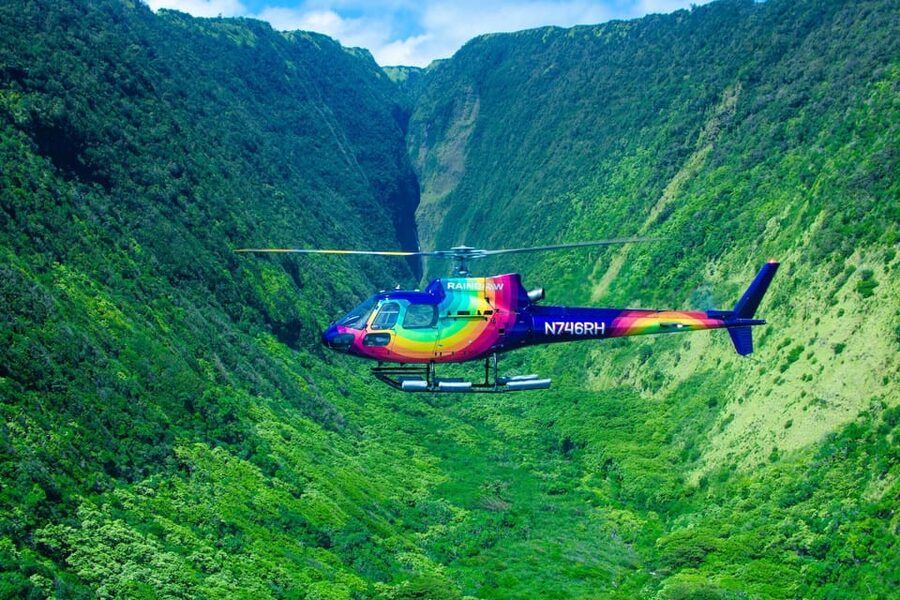
A doors-off flight can make the experience feel more immediate. You may get less window reflection and cleaner photographs, and the open air can make the changing views feel more direct.
But the arrangement comes with conditions. Your seat may not be next to an open door, even if you book the doors-off option. Passengers must also meet minimum weights for that aircraft configuration: 80 pounds or more in the Robinson R44, and 100 pounds or more in the Airbus Astar.
A doors-on flight is not the lesser choice. It offers protection from wind and may be more comfortable if you are sensitive to cold air or noise. You should bring warm clothing, a jacket, sunglasses, a hair tie, and closed-toe shoes for either option. Loose hair can become a nuisance in an open-air aircraft.
The operator provides straps and cases for cell phones. Use them. A phone that slips away is not worth a better photograph.
Is $895 a fair price?
At $895 per person, this is expensive by any normal sightseeing standard. The cost makes more sense if you value time and access. In 90 minutes, you cover volcanoes, remote valleys, waterfalls, beaches, and reefs that would be difficult to combine on the ground.
It is less convincing as a value if you want slow exploration, beach time, or close contact with one place. The aircraft passes over every sight, and the flight may feel fast for anyone who prefers to stop, walk, and look around.
I would consider this a special-occasion tour rather than a casual add-on. It suits someone who wants a big-picture view of the island, has limited time, or cannot manage long road journeys to the northern valleys. A private group is available, which may be worth considering if sharing a flight with a smaller party is important to you.
The current customer score is 3.8 out of 5 from eight ratings. That is a mixed but respectable result, not a reason to dismiss the tour. The strongest praise centers on breathtaking views, smooth flying, calm pilots, and useful narration. Those are exactly the parts that matter most on a helicopter ride.
Practical rules before you fly
You cannot fly if you are intoxicated, and the operator can refuse service while still charging the full amount if you appear intoxicated. All passengers age 24 months and older need a full-fare seat.
A weight and balance fee applies to each passenger weighing 250 pounds or more. For passengers between 250 and 275 pounds, the fee is 50 percent of the seat price. At 275 pounds or higher, an additional seat must be purchased after booking.
You also cannot take part if you plan to scuba dive within 24 hours of the flight. This is an important scheduling detail for a Big Island trip, where helicopter sightseeing and underwater activities often compete for the same day.
The tour is wheelchair accessible, and the live guide speaks English. Free cancellation is available up to two days before departure for a full refund, which gives you some protection if your plans change.
Should you book this Big Island helicopter tour?
Book it if you want to understand the Big Island as one huge volcanic island rather than a collection of separate beaches and towns. The route is unusually broad, and the views of Mauna Loa, Mauna Kea, Kohala, remote valleys, and waterfalls give you a strong sense of place in a short time.
I would be more cautious if $895 feels uncomfortable, if you dislike aircraft noise, or if you need guaranteed open-door seating. You should also skip it if your schedule includes scuba diving within the next 24 hours.
For the right person, this is a memorable splurge. Arrive early, dress warmly, secure your phone, and treat the flight as an aerial overview rather than a series of visits. The price is high, but the access to Kohala’s valleys and the sheer range of scenery make it easier to justify.
FAQ
How long is the helicopter tour?
The flight lasts 90 minutes, or one and a half hours.
Where does the tour begin?
It begins at Rainbow Helicopters in the Big Island Jet Center building near Kailua-Kona. Park in the large lot south of the brown building and enter through the front doors.
How early should I arrive?
Arrive one hour before your scheduled departure for check-in and the mandatory safety briefing.
Is hotel transportation included?
No. Hotel pickup and drop-off are not included, so you need to arrange your own transportation to the meeting point.
Can I choose a doors-off flight?
Yes. Doors-on and doors-off options are available, depending on the option selected. A doors-off booking does not guarantee that your seat will be directly beside an open door.
What should I wear and bring?
Bring warm clothing, a jacket, sunglasses, a hair tie, and closed-toe shoes. Straps and cases are provided for cell phones.
Can children fly on the tour?
All passengers who are 24 months or older must purchase a full-fare seat.
Can I fly after scuba diving?
No. You cannot take part if you plan to scuba dive within 24 hours of the flight time.
Just added around the USA
- Zion National Park, Canaan Cliffs: Extended Helicopter Tour★ 4.5 · 4 reviews
- Zion National Park and Canaan Cliffs: Helicopter Tour★ 4.7 · 22 reviews
- West Maui and Molokai Special 45-Minute Helicopter Tour★ 5.0 · 9 reviews
- Waikoloa: Big Island Spectacular Helicopter Tour★ 4.5 · 5 reviews
- Oahu: Waikiki 20-Minute Doors On / Doors Off Helicopter Tour★ 4.9 · 32 reviews
- Las Vegas: Valley of Fire Helicopter with Scenic Landing★ 5.0 · 2 reviews
- Greater Yellowstone Trifecta Aerial Tour | 1-Hour Scenic Flight★ 5.0 · 6 reviews
- Hudson Valley Fall Foliage Helicopter Tour from Westchester (Shared)★ 4.0 · 2 reviews
Waterfall Helicopter Tours, compared.
Kauai Private Doors-Off Helicopter: Ultimate Waterfalls & Canyons
Read our review →
Helicopter Scenic Flight over Victoria Falls 12-13 minutes Flight
Read our review →
Niagara Falls, Canada: Scenic Helicopter Flight
Read our review →
Kauai Deluxe Waterfall Safari: Helicopter Tour
Read our review →
Lihue: Deluxe Waterfall Safari Helicopter Tour
Read our review →
Browse the lists this tour appears in